Two surf parks can look identical in photographs and give you completely different days. One hands you 12 waves in an hour on a wave that reforms twice. Another gives you four rides, each 45 seconds long, on the best wave you will surf all year. The difference is the machine at the end of the pool.
We track 84 parks, and 15 named wave systems among them. Two companies account for most of the world: Wavegarden powers 24 of our parks and Endless Surf 15, which is close to half of the directory between them. Everything else divides among PerfectSwell, Kelly Slater Wave Co, SurfLoch, Citywave, and a handful of systems with one installation each.
This is the technology-by-technology breakdown: how each one moves water, what it actually rides like, where you can surf it, and who it suits. If you want the shorter version first, start with our beginner's guide to wave pool technology.
The two things every wave pool has to do
Every system solves the same two problems. First it has to make energy, because there is no wind and no distant storm. Second it has to shape that energy into something that breaks, which is the job of the pool floor.
That second part gets overlooked. The bathymetry, the contour of the bottom, is what turns a moving lump of water into a soft roller, a peeling wall, an A-frame, or a barrel. Two parks running the same generator with different floors produce noticeably different waves. It is also why parks cannot simply "turn up" the wave: the floor is concrete and it was poured for a specific set of shapes.
The other split worth understanding is traveling waves versus standing waves. A traveling wave moves across the pool and you ride along it, the way you would in the ocean. A standing wave is a permanent sheet of water pumped over a shaped surface, and you ride in place. Both are legitimate surfing. They are not remotely the same experience, and the price difference is large.
Wavegarden Cove: the commercial default
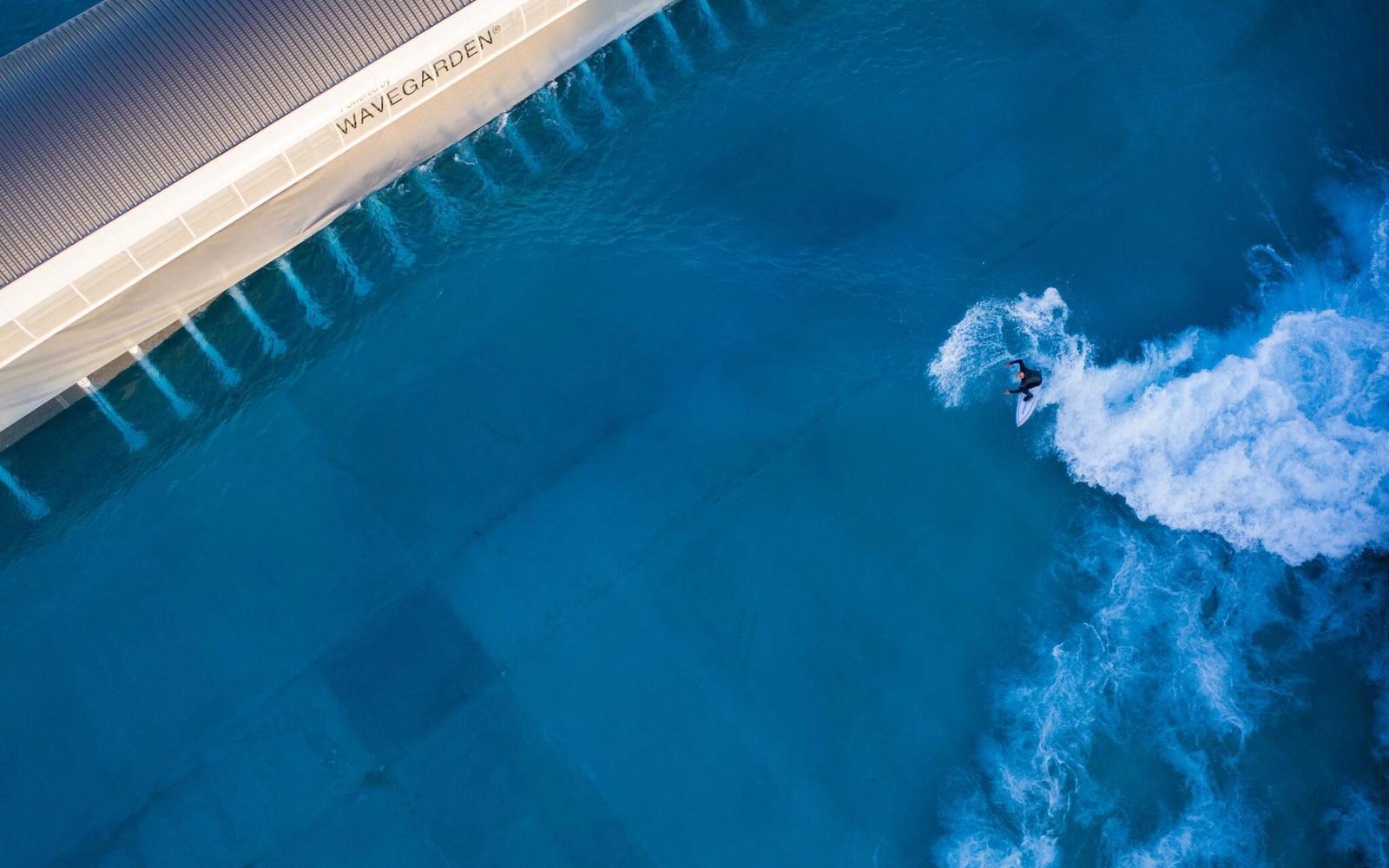
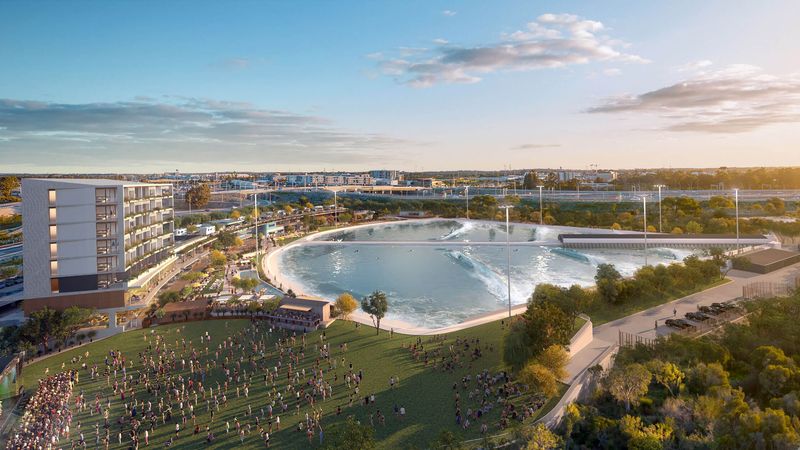
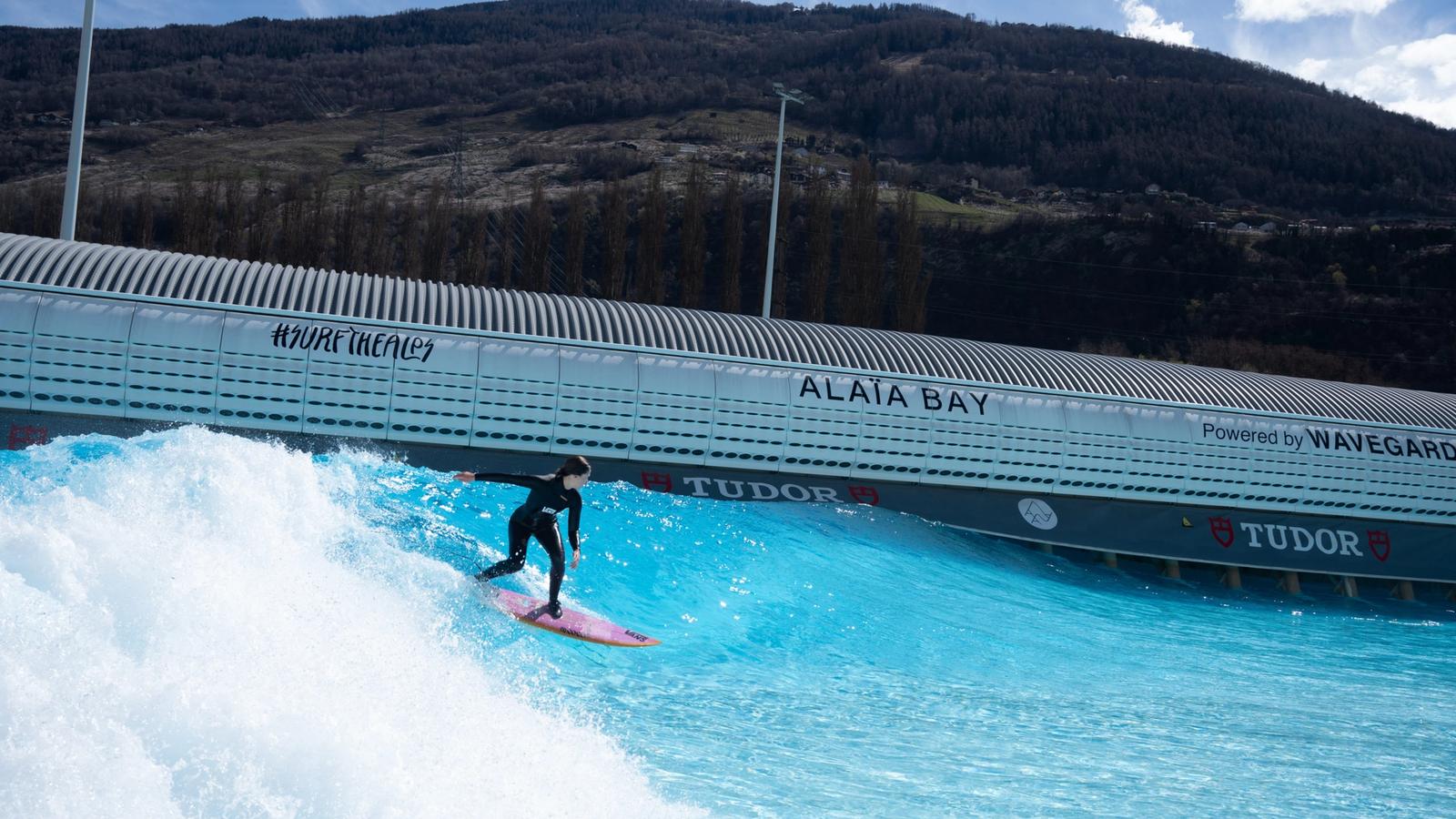
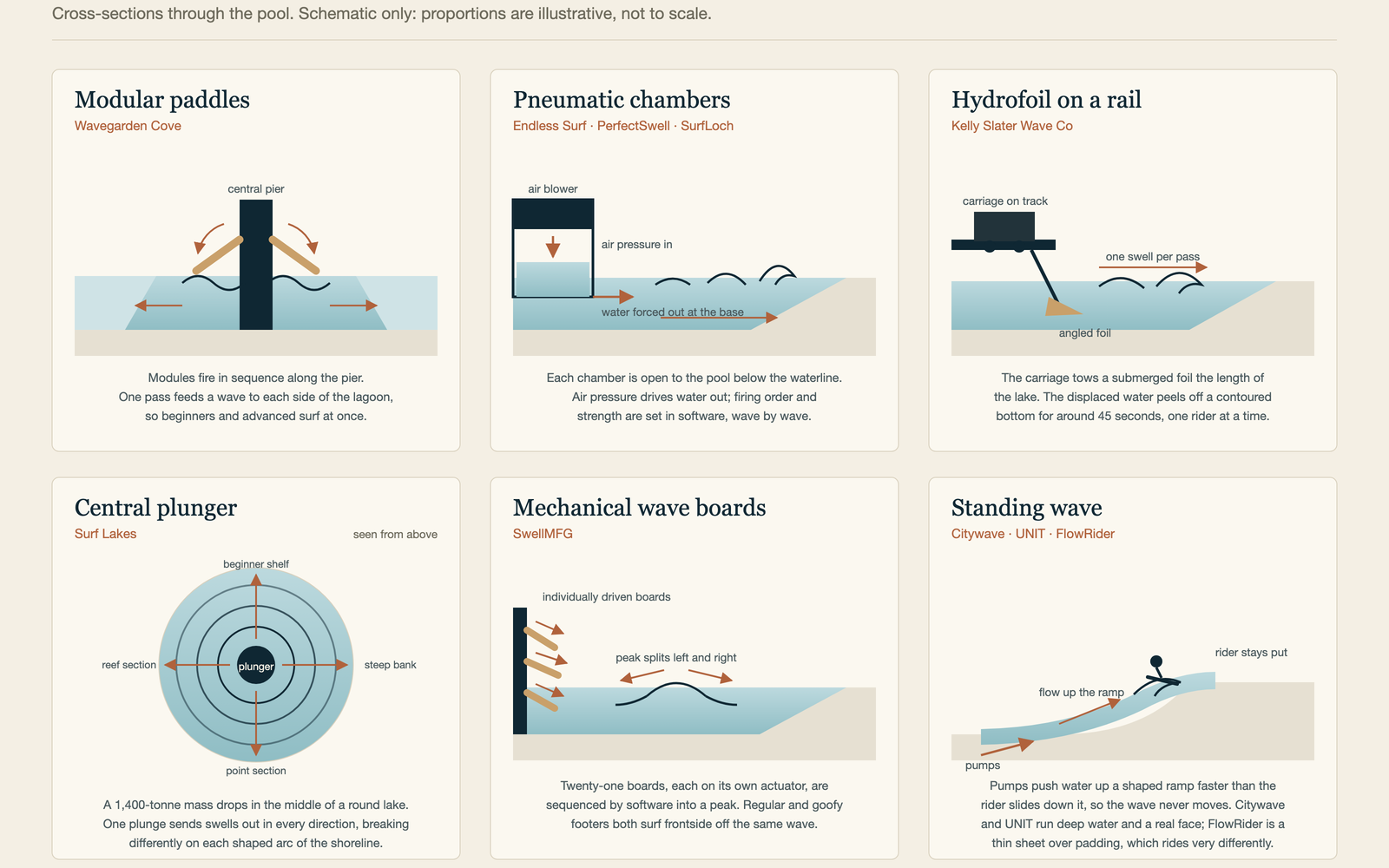
The Spanish company Wavegarden is the most installed name in the business, and the Cove is why. It uses a line of modular electromechanical paddles along a central pier. Each module fires in sequence, and the number of modules sets the pool's size and capacity.
Module counts are the spec that matters. DSRT Surf in California runs 52. Perth and Auckland are both going in at 62, tied with Beyond the Club in São Paulo, which at 62 modules and 28,000 square metres is the largest Cove operating anywhere.
What a Cove does better than anything else is serve everyone at once. It can push out up to 1,000 waves an hour, run different settings in different zones of the same lagoon, and reform waves so a single machine cycle feeds a beginner bay and an advanced peak simultaneously. That is a business model as much as a wave: lessons, memberships, advanced sessions, and events all running in one afternoon.
The trade-off is that a Cove wave is short and busy. You get volume and progression rather than one perfect long ride, and peak sessions at the popular parks fill up.
Ride it at: The Wave Bristol, Lost Shore in Scotland, Alaia Bay in the Swiss Alps, URBNSURF Melbourne and Sydney, Wave Park in Korea, Praia da Grama and Surfland in Brazil, Atlantic Park in Virginia Beach.
Endless Surf: the programmable one
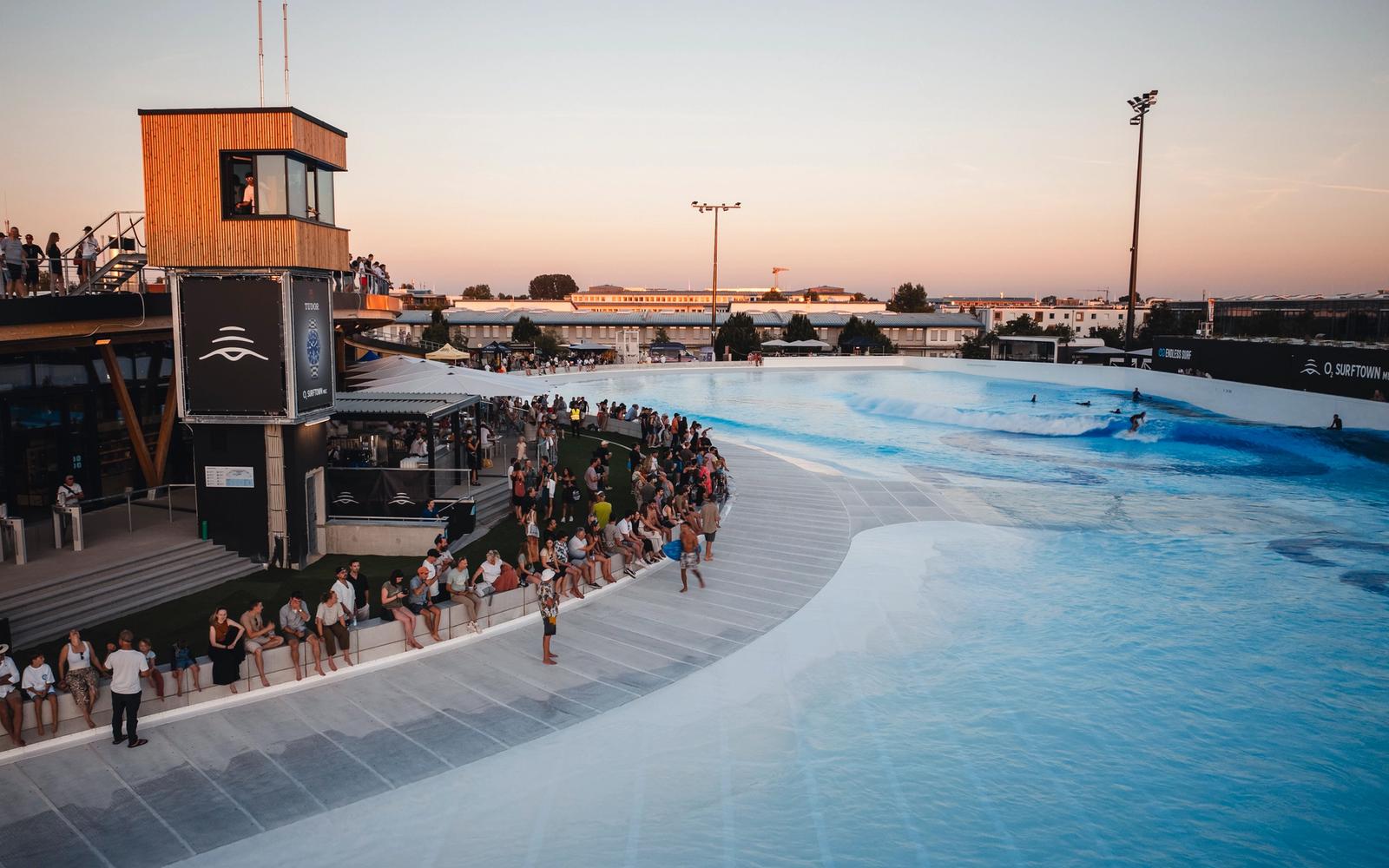
Endless Surf is pneumatic. Instead of paddles, it presses air through a bank of chambers called caissons, and the software controls each one independently. The company names its systems by caisson count, which makes the spec easy to read: the ES34 running at O2 SurfTown outside Munich has 34, The Point in Florida is an ES36, and PHX Surf in Arizona and Thermal Beach Club in California are both specified at 48, the largest announced in the United States.
Independent chamber control is the selling point. Munich runs two bookable formats: A-Frame, where the wave breaks in the middle and peels both directions, and Pointbreak, where it runs the full length of the pool for longer rides. Session levels step from First Timer at half a metre through Rookie, Progressive, Intermediate, Advanced and Expert, with barrels arriving at the top settings. The Point has published rides of up to 19 seconds in Single Peak and 11 in Split Peak.
Endless Surf is also winning the pipeline. It has 13 parks in our directory but only two open, so most of what you read about it is still renderings. Munich is the one place to judge it properly, and it holds up.
Ride it at: O2 SurfTown Munich and Qiddiya in Saudi Arabia. The Point opens in Florida shortly, the first in the US.
PerfectSwell: the one that mimics the ocean
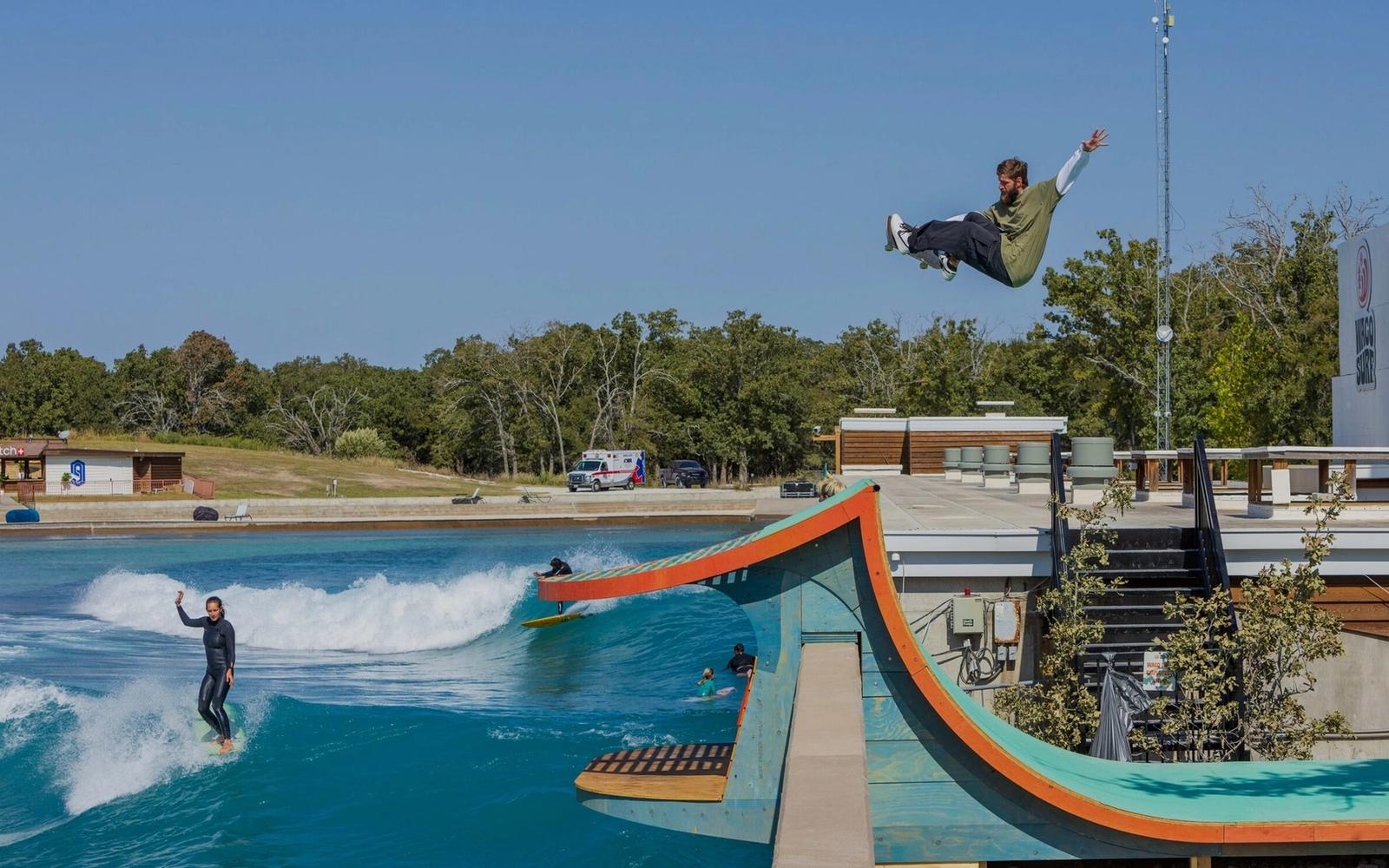
American Wave Machines takes a different philosophy. PerfectSwell is also pneumatic, but rather than producing one repeatable wave it programs a swell: chambers fire in patterns that combine and interfere the way real ocean swell does, which is how the same pool can produce a punchy air section on one wave and a long wall on the next.
That variability is why PerfectSwell parks are popular with better surfers and with contest organisers, and why Waco Surf built its reputation on clips rather than lessons. The catch is that variability cuts both ways: your set is not identical to the last one, which is exactly what some people want and exactly what frustrates others.
Brazil is the PerfectSwell capital. São Paulo Surf Club runs a 220-metre pool that its operator says shapes more than 100 wave types, and Boa Vista Village has another. Zion Shores in Utah is building what is billed as the largest PerfectSwell yet.
Ride it at: Waco Surf, Skudin Surf at American Dream in New Jersey, Surf Stadium Japan, Riyue Bay in China.
Kelly Slater Wave Co: the longest wave in the world
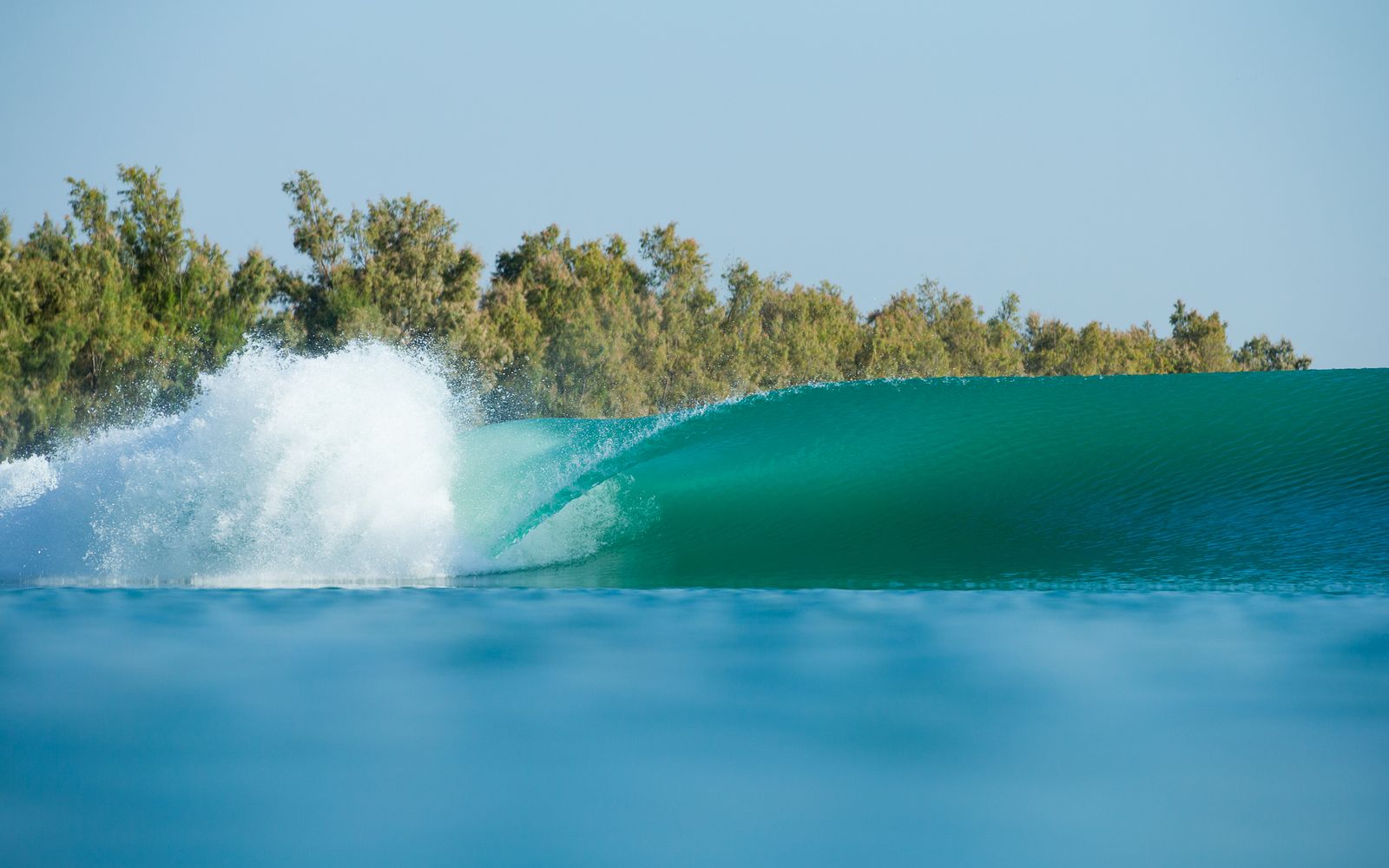
Completely different engineering. A hydrofoil the size of a bus runs along a rail beside a 700-metre freshwater lake, dragging a swell behind it that breaks against a precisely shaped bottom for the entire length of the pool. Rides last around 45 seconds, with multiple barrel sections, and the wave is the same every single time.
The physics impose the trade-off. One foil means one wave at a time, so a session is a queue: you get a handful of rides, not a dozen. That is a fundamentally different product, and it is priced like one. Surf Ranch in Lemoore has historically sold whole-pool buyouts rather than public hours.
The system's second life is more interesting than its first. Surf Abu Dhabi opened as the largest of its kind and produces the biggest barrels available to a paying customer anywhere, at the highest session price in our price guide. Austin Surf Club in Texas is next, though its construction paused in 2026.
SurfLoch: the retrofit specialist
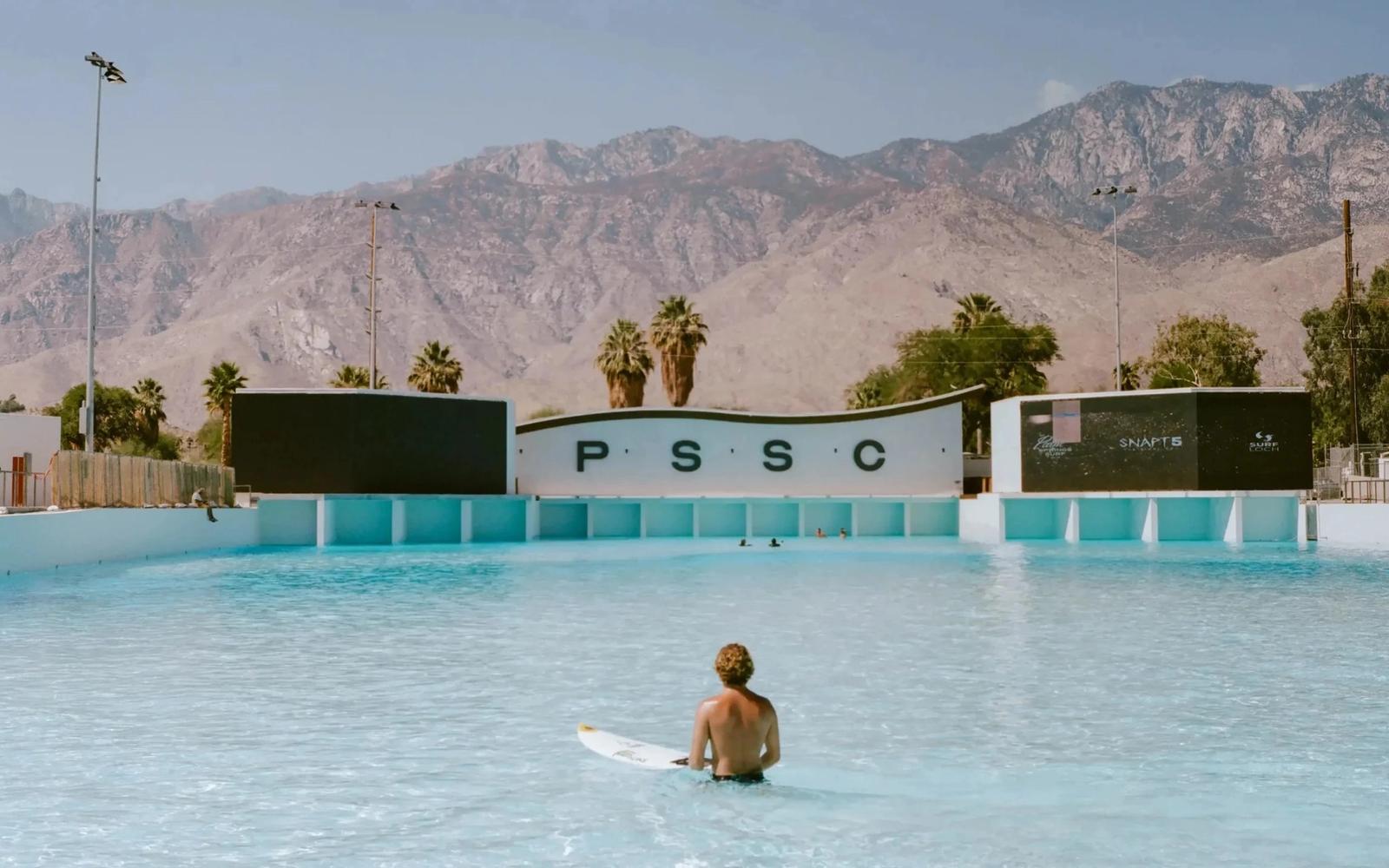
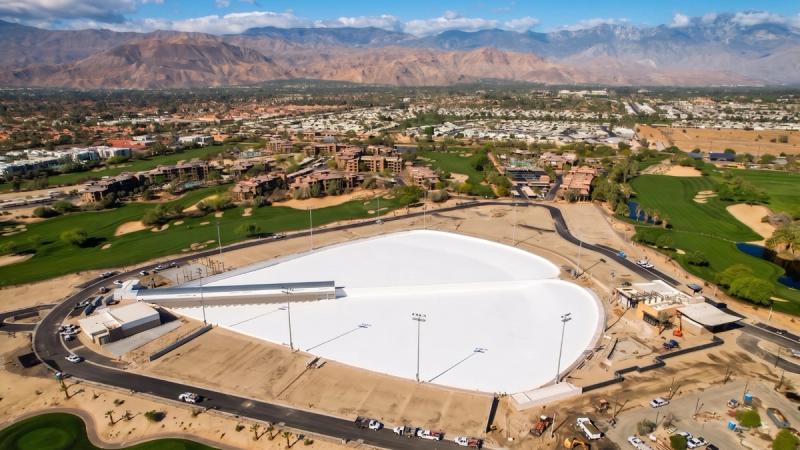
SurfLoch, run by Tom Lochtefeld, is pneumatic like Endless Surf and PerfectSwell, and its two installations show unusual range. Palm Springs Surf Club put a very good wave inside an existing California waterpark, with sessions tiered by ability from a beginner Waikiki setting up to advanced. RIF010 squeezed one into a canal in central Rotterdam, which at roughly $39 a session is the cheapest traveling wave in our price guide.
Lochtefeld's history matters for reading the rest of the industry: he created FlowRider and Wave Loch, which means he largely invented the standing-wave category before moving into traveling waves. His company is also currently pushing for an open bid on the Alameda site in the Bay Area.
Surf Lakes: the one nobody has finished yet
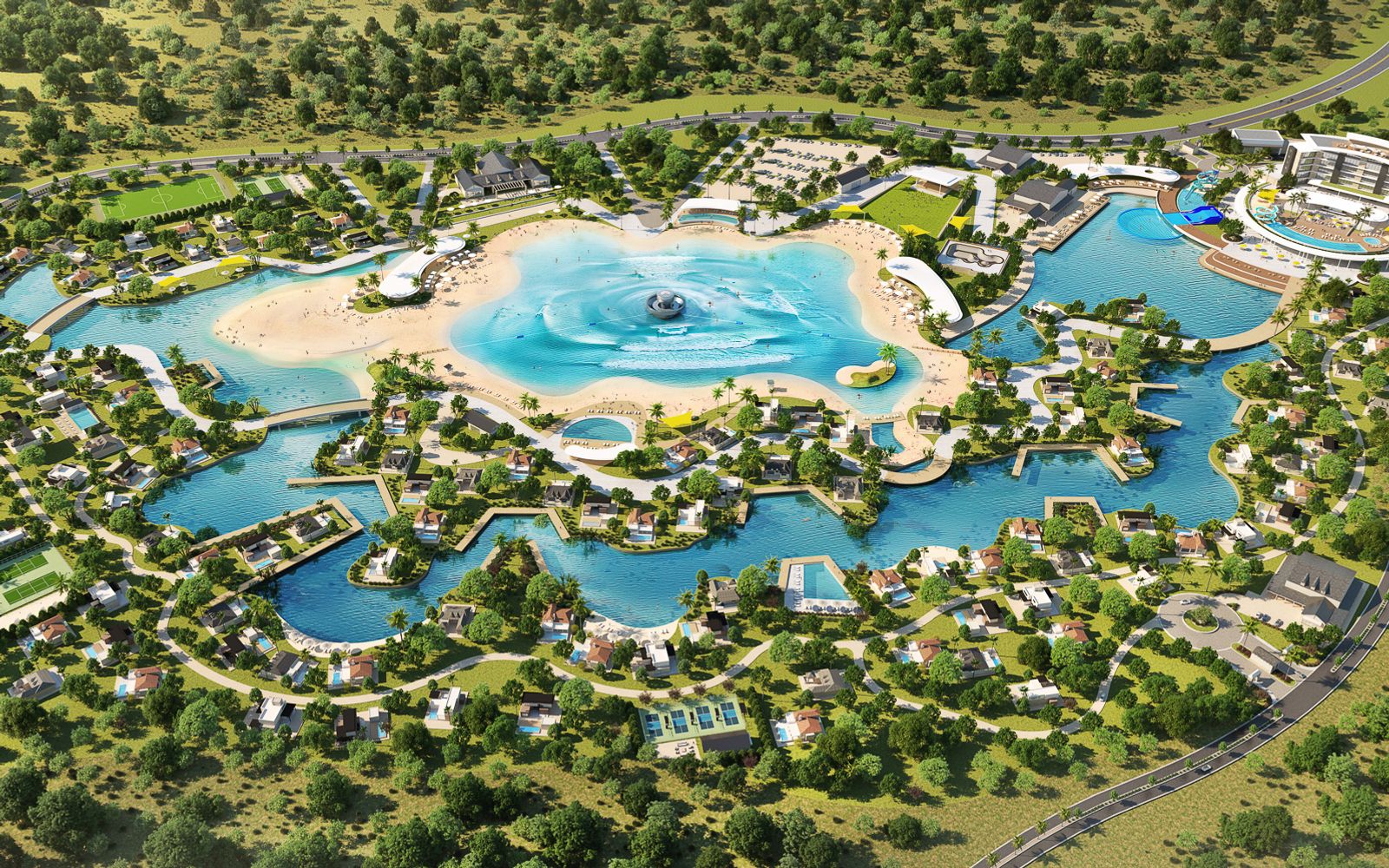
The most unusual design in the business. An Australian system drops a 1,400-ton central plunger into the middle of a circular lake, sending swells outward in every direction at once. They break against a contoured floor that produces several different waves simultaneously around the ring, from beginner whitewater on one arc to hollow sections on another, which is why the company calls it "5 Waves."
If it works at scale, it is the most efficient layout anyone has proposed: one machine, many skill levels, no queue for a single peak. The caveat is large. Surf Lakes has proven it at a full-size prototype in Yeppoon, Queensland, and has never opened a commercial park. Peak Surf Park near Tampa would be among the first.
SwellMFG: the true split peak
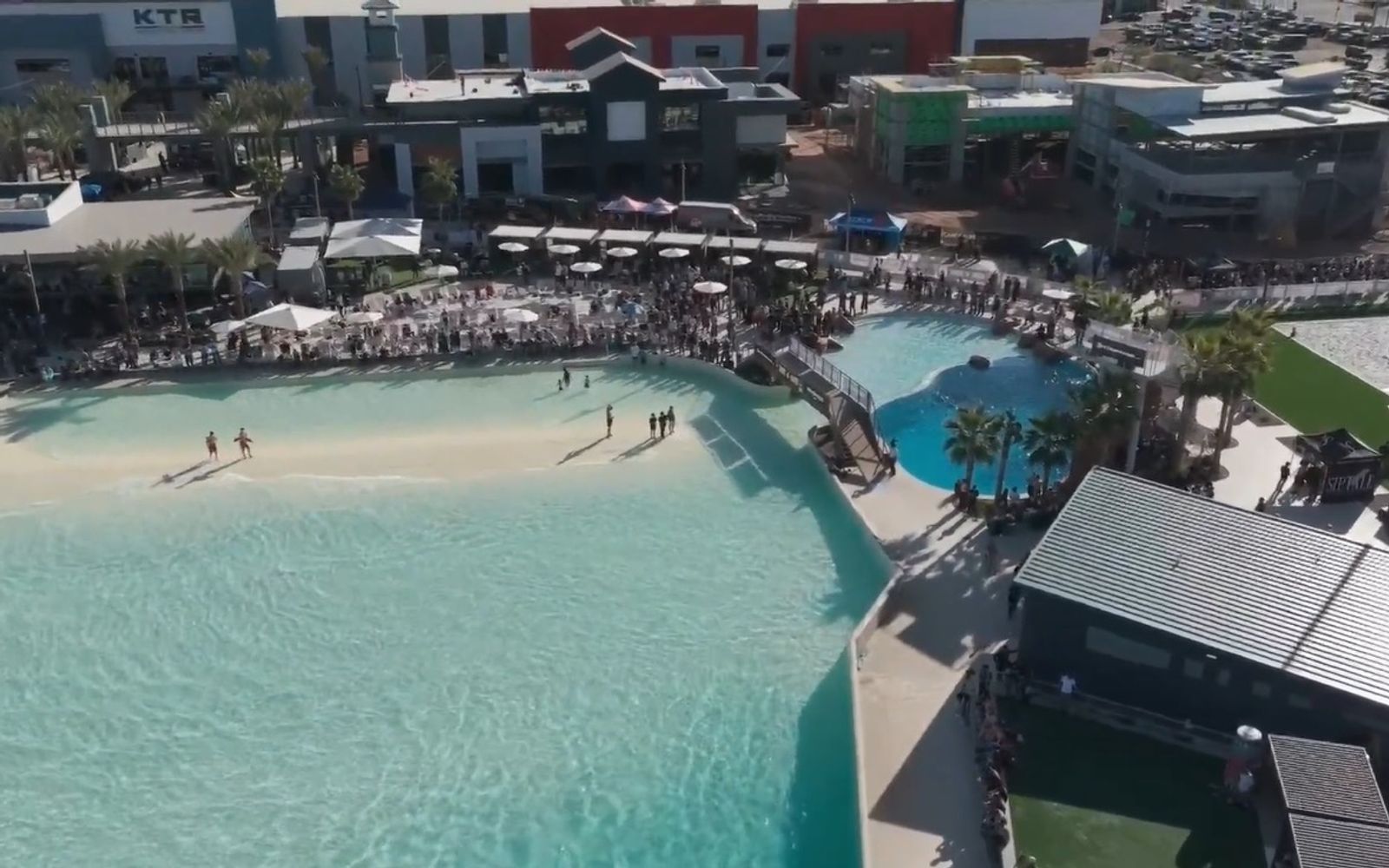
An Arizona-designed system using 21 mechanical wave boards sequenced by software rather than air pressure. Its signature is a genuine A-frame: lefts and rights peel simultaneously from the same centre point, so regular and goofy footers both surf frontside in the same session.
Revel Surf in Mesa is the only one operating. Sessions cap at 16 surfers, eight per side, with roughly 10 to 12 waves each in an hour and a named menu of settings that runs from mellow Malibu reforms up to V-Land, which grows and barrels down the pool. Cannon Beach near Dallas is building the second.
Citywave and the standing waves
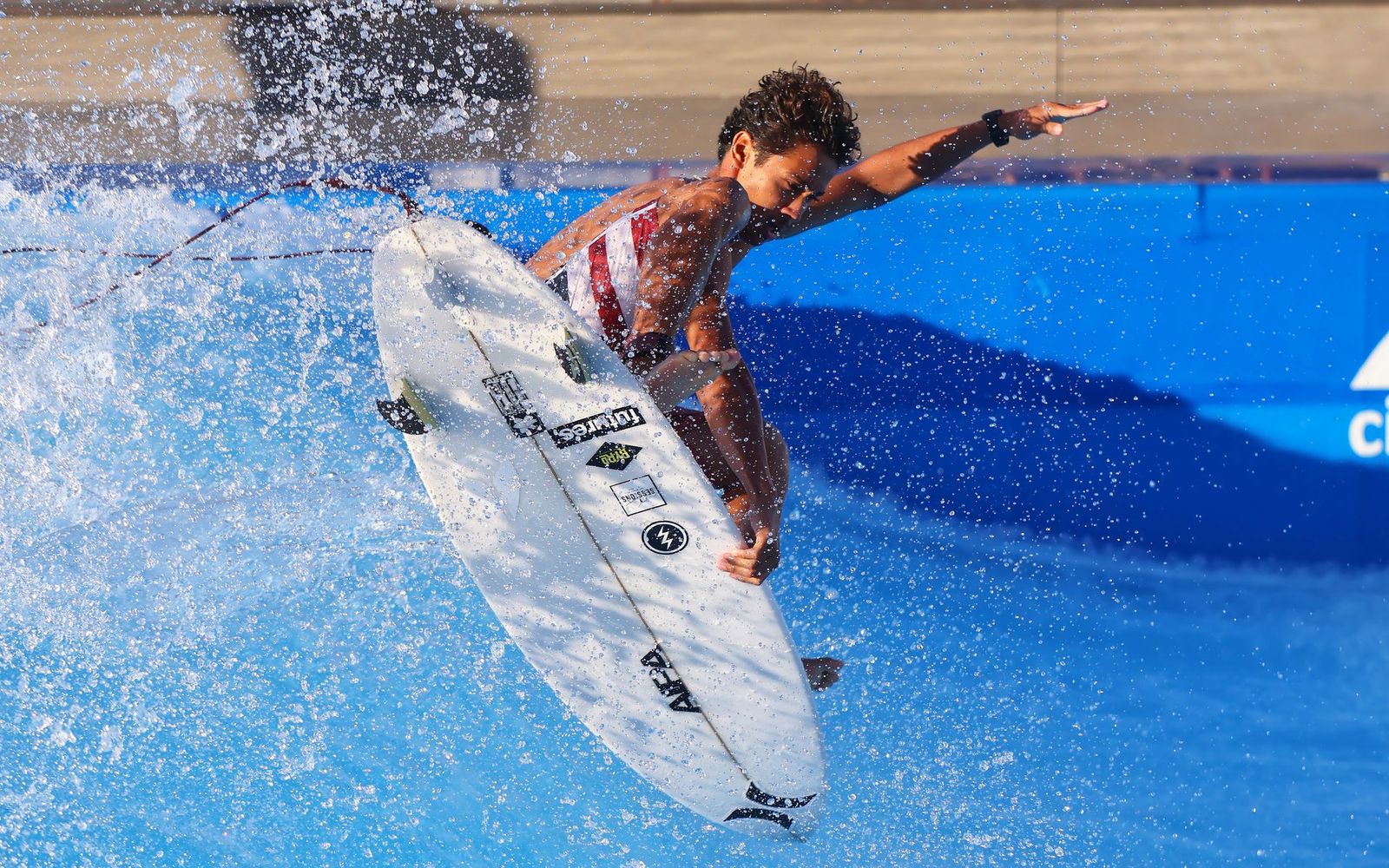
A different sport wearing the same clothes. A standing wave pumps a sheet of water over a shaped surface at speed, producing a stationary face you ride in place. There is no paddling, no take-off, and no end section, but there is unlimited repetition, which makes it the fastest way to drill turns that exists.
Citywave is the second most installed system in our directory after Wavegarden, on 16 parks. Most are in Europe, where it accounts for the bulk of Germany's venues along with sites in Spain, Switzerland, Belgium and Italy. In the US it runs The LineUp at Wai Kai in Hawaii, Lakeside Surf in Washington, and The Surf Lounge at PopStroke in Texas, and it also powers citywave Tokyo and TRIFECTA Surf Club in Singapore. Related systems include UNIT Surf Pool, on six parks, which supplies the deepwater standing wave at Revel Surf and is going into Zion Shores, and EpicSurf from ADG, which runs at Heroes Paradise.
Sessions typically run $40 to $75, well under half a traveling-wave hour, and no weather or swell affects them. The machines are also a fraction of what a full lagoon costs to build, which is a big part of why they keep proliferating. Treat it as skill practice, not as a substitute for a surf trip.
The systems with something to prove
Four more appear in our directory with a single project each, and all four are unproven commercially.
- Ka'ana Wave Co builds a modular system that can be deployed temporarily. It ran a two-month pop-up at Britannia Beach in British Columbia in 2022 and is now signed to East Point Reef Club.
- Premier Surf Systems is proprietary technology at Crest Surf Clubs on Long Island, with no operating installation anywhere, which is a real consideration given Crest sells memberships reported at $35,000 and up.
- Surf Center in Curitiba runs its own proprietary wave in Brazil.
- Ocean Kamp in Oceanside is building a pneumatic lagoon and has not named its vendor publicly.
Which one do you actually want?
- Learning to surf: any Wavegarden Cove. The beginner bays are purpose built, the instructor programmes are the most developed, and the wave count is high.
- Progressing from whitewater to green waves: Wavegarden or Endless Surf, both of which step cleanly through ability levels within one session structure.
- Barrels: Kelly Slater Wave Co, and be ready to pay for it. PerfectSwell and Endless Surf produce them at top settings.
- Maximum waves per hour: a Cove, or a standing wave if repetition matters more than the ride.
- Practising turns cheaply: Citywave, UNIT, or EpicSurf. Nothing else comes close on cost per minute on your feet.
- The most ocean-like feel: PerfectSwell, because the swell varies rather than repeating.
What to watch through 2027
The interesting question is no longer whether a machine can make a good wave. It is which systems survive contact with a paying public at scale. Endless Surf has 11 parks in our directory that have not opened yet, Surf Lakes and Premier Surf Systems have never run one, and several of the biggest announced pools depend on the same handful of manufacturing slots.
The full list of what is coming and when is in our opening tracker. Every park's technology is listed on its own page in the directory, and if what you actually want to know is what an hour costs, that is in the 2026 price guide.
Photos courtesy of the parks and manufacturers named in each caption.