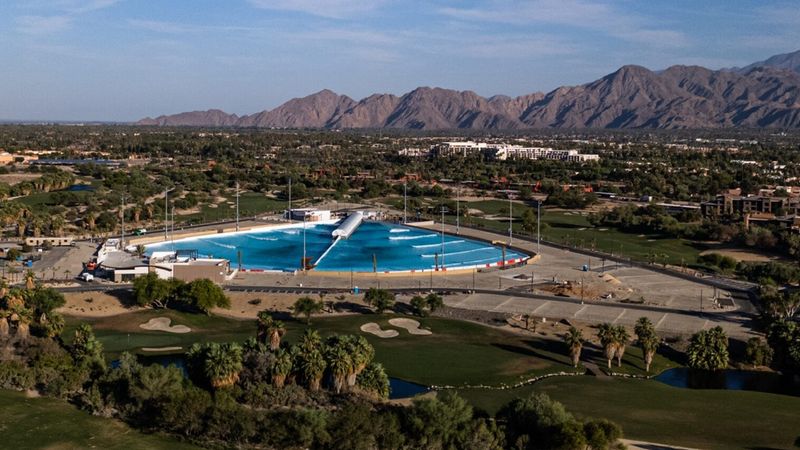
Ask what a wave pool costs and you will get answers between 11 dollars and 680, which is useless as a budget. The spread is that wide because "wave pool" covers two different machines that sell two different experiences, and most price lists mix them together.
Sort them apart and the picture gets clear fast. A standing wave costs a median of 56 dollars a session. A surf lagoon costs a median of 65. Below are the 41 open parks worldwide whose session rates could be checked, converted to US dollars at European Central Bank rates for 9 October 2026. Each figure is the cheapest adult surf session a park sells, not a lesson, orientation class or spectator pass.
The two things you can buy
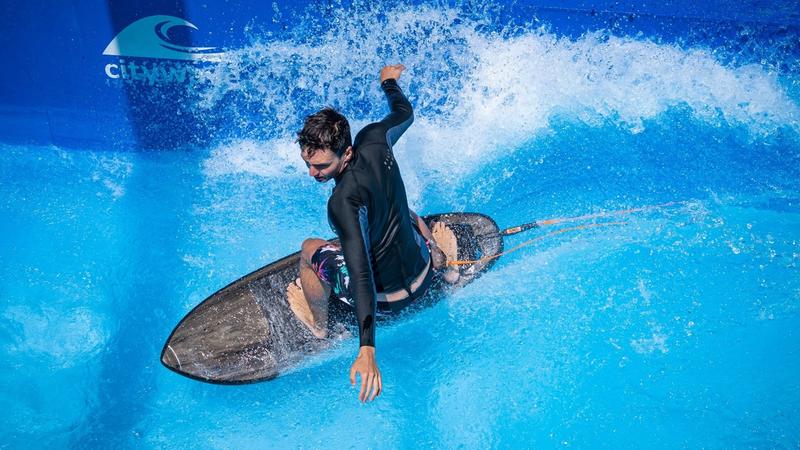
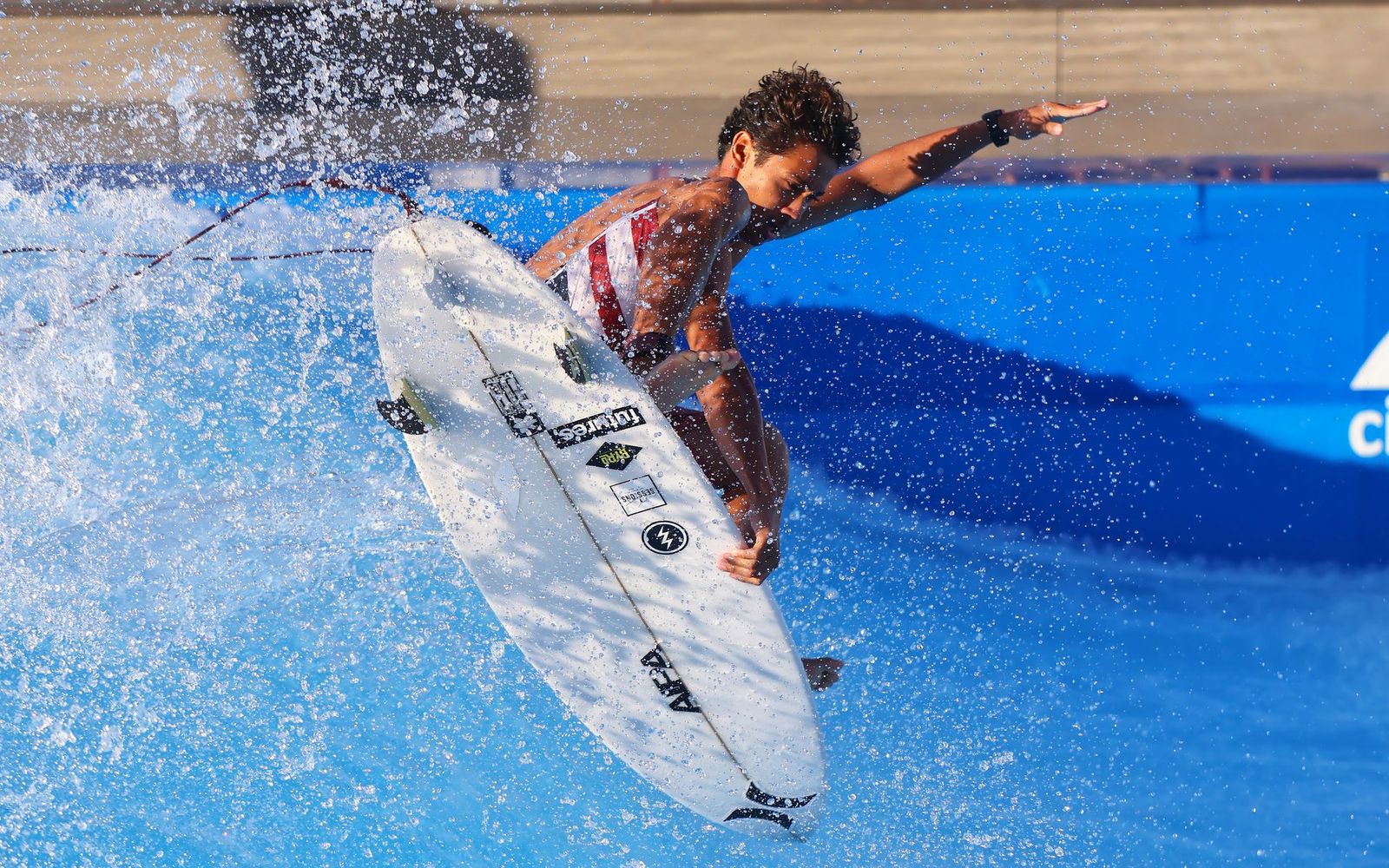
A standing wave pumps water up a shaped ramp and holds it in place. You drop in, ride a wave that never moves, and stay on it until you fall. Citywave, UNIT Surf Pool, FlowRider and EpicSurf build these. They fit inside a building, they run all year, and they cost a fraction of a lagoon to build, which is why Germany alone has six of them.
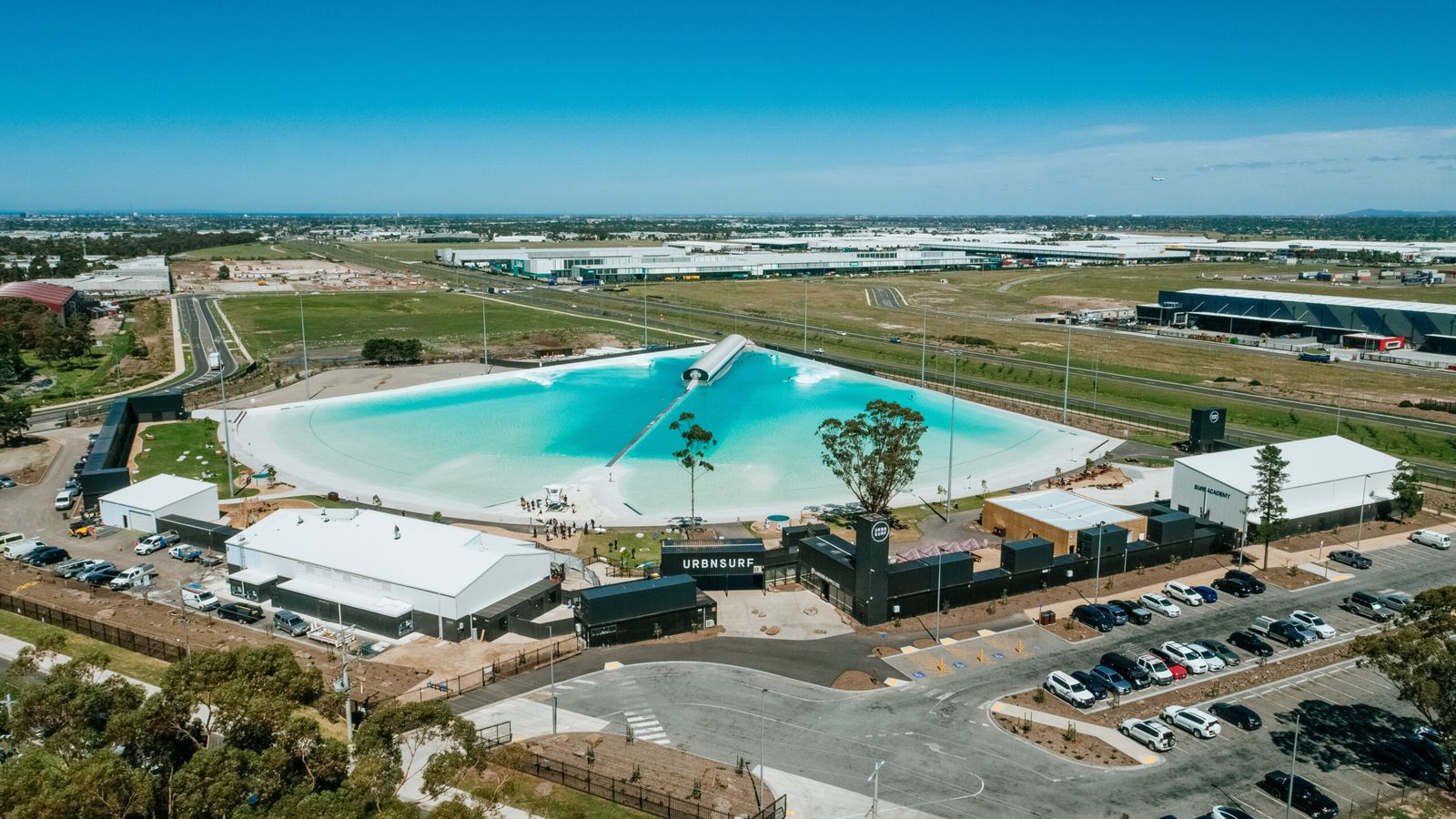
A surf lagoon generates a wave that travels across open water. You paddle, catch it, and ride it down the line until it closes out, the same motion as ocean surfing. Wavegarden, PerfectSwell, Endless Surf, SurfLoch and Kelly Slater Wave Co build these. They need several acres and tens of millions of dollars, which is why there are fewer of them and why they cost more to surf.
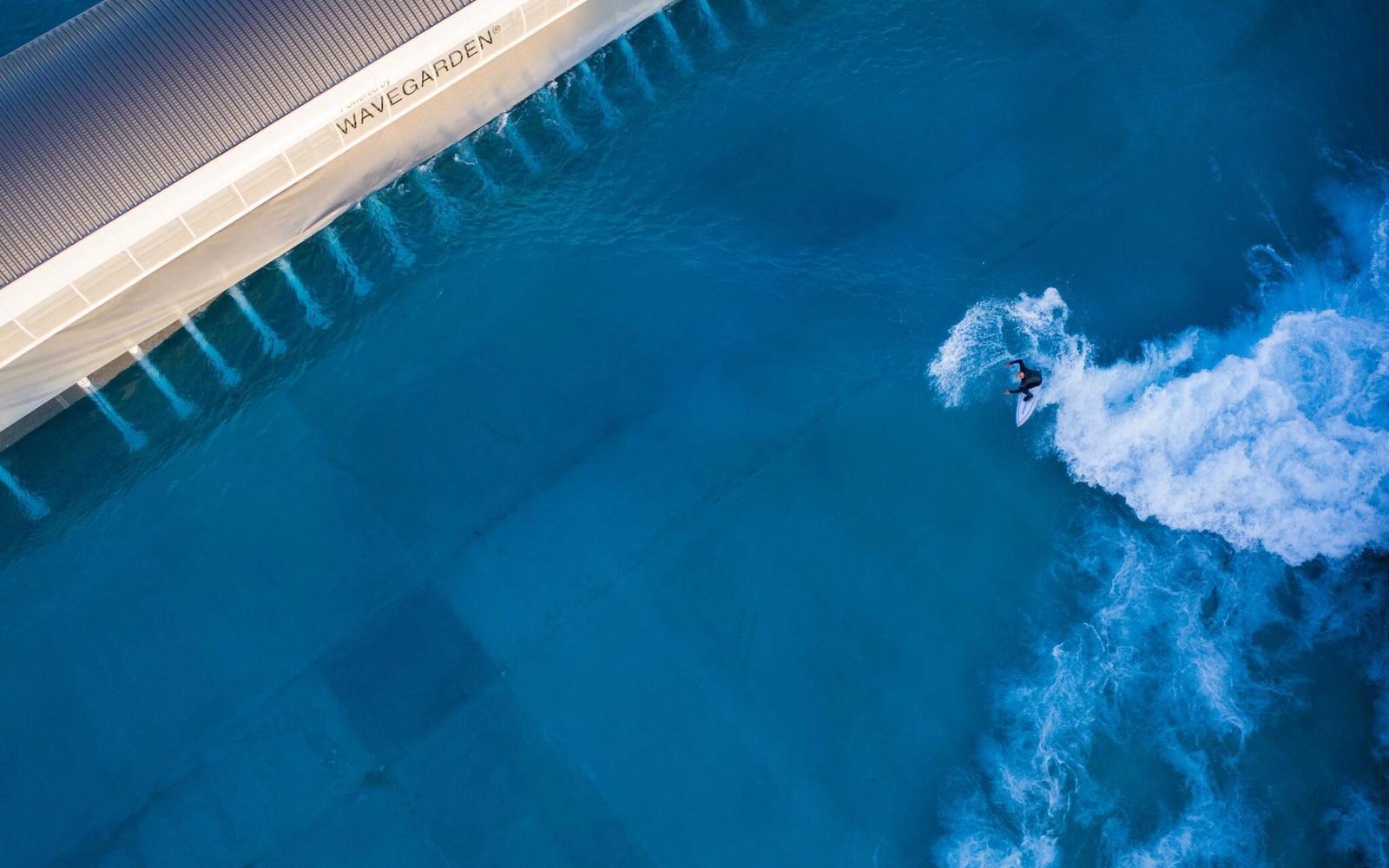
Neither is a lesser version of the other. A standing wave gives you continuous ride time and rewards rail work and airs. A lagoon gives you the actual act of catching and riding a moving wave. If you are choosing where to spend a day, that difference matters more than the price gap.
Standing wave prices
Twenty-two open parks publish a checkable rate. Cheapest first.
- MY SURF Citywave at Wave Island, Monteux, France: $11 for a 10-minute session; Wave Island does not say whether its $37 park ticket is also needed
- Lakeside Surf, Chelan, USA: $40
- Honna Surf Hub, Alcorcón, Spain: $45
- RheinRiff, Düsseldorf, Germany: $45
- irie surf, Freiburg im Breisgau, Germany: $46
- Citywave Hadera, Hadera, Israel: $51
- citywave Vilnius, Vilnius, Lithuania: $54
- Surf Langenfeld, Langenfeld, Germany: $54
- L&T Hasewelle, Osnabrück, Germany: $55
- Jochen Schweizer Arena, Taufkirchen, Germany: $56
- Surflux, Arlon, Belgium: $56
- Wellenwerk Berlin, Berlin, Germany: $56
- YourWave, Hawea Flat, New Zealand: $56
- Flow Moscow, Moscow, Russia: $61
- Citywave Vienna, Vösendorf, Austria: $62
- Wakeparadise Milano, Peschiera Borromeo, Italy: $62
- The LineUp at Wai Kai, Ewa Beach, USA: $65
- citywave Tokyo Sakaimachi, Sakai-machi, Japan: $68
- OANA Surf, Ebikon, Switzerland: $77
- TRIFECTA Surf Club, Singapore: $78
- Urbansurf, Zürich, Switzerland: $78
- Heroes Paradise, Brandon, USA: $90
The lowest figure on the list is for a short slot: 11 dollars at Wave Island, a water park in Monteux, France, buys 10 minutes on its Citywave. For a full session, the cheapest standing wave is Lakeside Surf in Washington at 40 dollars for 45 minutes, dropping to about 34 in a pack. TRIFECTA in Singapore, one of the parks in our Asia guide, advertises a lower number, 50 Singapore dollars, but that buys the mandatory 45-minute orientation class; its open sessions start at 100 Singapore dollars, about 78.
Session length varies more than price here, so read it before you book. Urbansurf Zürich is 30 minutes for 78 dollars, the least ride time per dollar in this list, and irie surf's 46 dollars also buys 30 minutes. Wakeparadise Milano adds a 20-euro club membership on a first visit. Most of the German venues run 45 to 60 minutes.
Surf lagoon prices
Sixteen open parks publish a checkable rate.
- URBNSURF Melbourne, Tullamarine, Australia: $27 for Surf In The Bays whitewater on a softboard; Point sessions from $80 (AUD 114)
- URBNSURF Sydney, Sydney Olympic Park, Australia: $27 for Surf In The Bays whitewater; Point sessions from $83 (AUD 119)
- Nomadas Surf Park, El Puerto de Santa María, Spain: $34
- The Wave Bristol, Easter Compton, United Kingdom: $45 as the listed from-price, $58 at weekends in October
- RIF010 Urban Surf, Rotterdam, Netherlands: $50
- Riyue Bay, Wanning, China: $58, as listed by a booking agent
- DSRT Surf, Palm Desert, USA: $60 for Bay and Play; Reef sessions run $130 to $320
- Wave Park, Siheung, South Korea: $60, water park access included
- Surf Stadium Japan, Makinohara, Japan: $70
- Lost Shore Surf Resort, Ratho, United Kingdom: $79
- O2 SurfTown Munich, Hallbergmoos, Germany: $106
- Atlantic Park Surf, Virginia Beach, USA: $117
- SRF Park TLV, Tel Aviv, Israel: $118 for a Reef session; first-timers start with a Bay lesson at $90
- Surf Abu Dhabi, Abu Dhabi, UAE: $136
- Alaia Bay Switzerland, Sion, Switzerland: $155
- Palm Springs Surf Club, Palm Springs, USA: $206.70
The cheapest lagoon hour in the world is whitewater at URBNSURF, where Surf In The Bays costs 39 Australian dollars. Next is Nomadas in southern Spain, where 30 euros buys an hour of free surf in a 65-metre pool built for learning and progression. For a green wave in a bigger pool, the cheapest is RIF010 in Rotterdam, a SurfLoch wave in a working canal, at 45 euros for its Rookie hour, with gear and wetsuit rented separately. Board and wetsuit are extra for URBNSURF's Point sessions too, and for free surfing at Wave Park.
Three parks run both kinds of machine and are priced accordingly. Revel Surf in Arizona charges 129 dollars for a Level 2 hour in its lagoon, sells Level 1 only as an 89-dollar coached lesson, and charges 60 dollars for an hour on its River Wave, a standing wave for intermediate and advanced surfers. Waco Surf starts at 129 for the beginner Coaster tier, and runs its Shredmill standing wave at 49 dollars for 30 minutes. ADRENA in Saudi Arabia sells surf sessions from SAR 300, about 80 dollars, but guests must first buy park admission, from SAR 500 for an adult, so a session costs at least SAR 800, about 213 dollars.
The top of the market
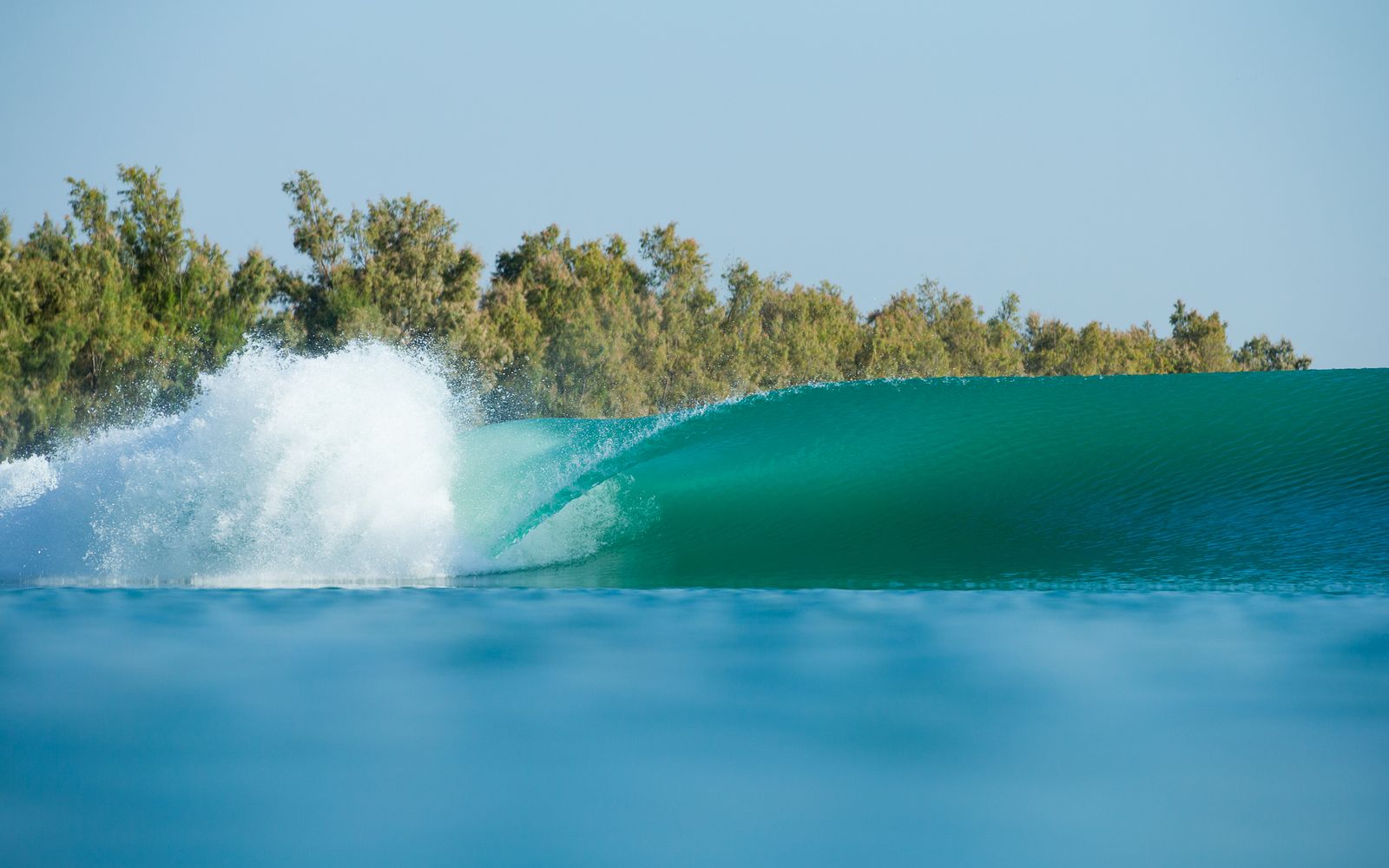
Surf Abu Dhabi appears on the list above at 136 dollars, which is Surf Social, a shared party-wave session giving 10 rides in 45 minutes. Its standard product is priced differently. In June and September, either side of a July and August closure, Open Surf runs 45 minutes with three surfers: AED 1,800 for the beginner setting, about 490 dollars, and AED 2,500 for intermediate or advanced, about 680. Each surfer is guaranteed roughly six waves. Outside summer, intermediate and advanced Open Surf run 90 minutes with up to four surfers for AED 3,500, about 950 dollars, while the beginner setting stays at 45 minutes and AED 1,800, so confirm before booking.
Kelly Slater's Surf Ranch in Lemoore publishes no public rate at all. Access is by private buyout, reported at 50,000 to 70,000 dollars for a full day. A day runs eight heats of 15 waves, so 120 rides, which is 417 to 583 dollars per wave the pool makes. Split across a group of 8 to 12, a seat costs roughly 4,200 to 8,750 dollars. Those two figures answer different questions and should not be combined.
What a wave actually costs
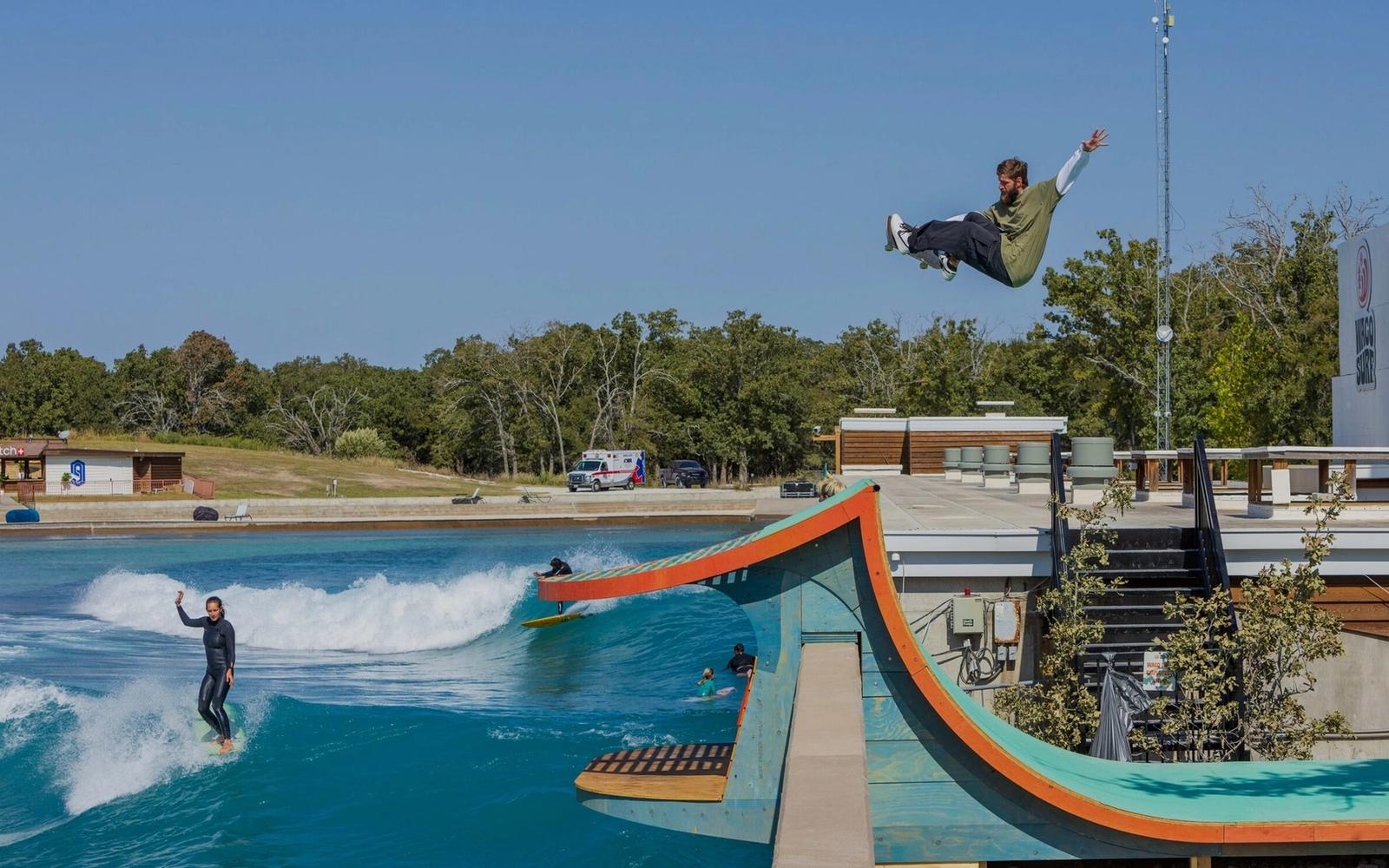
Session price and cost per ride are not the same number, and lagoons are where they diverge hardest.
A one-hour lagoon session in a rotating lineup delivers somewhere between 10 and 16 waves depending on the crowd and your positioning. Waco's 129-dollar Coaster tier at a dozen waves works out near 11 dollars a ride. Surf Abu Dhabi's 680-dollar advanced session at six guaranteed waves is about 113 a ride, roughly ten times as much, in exchange for an empty lineup and the best wave in the world.
Standing waves do not work in waves at all, which is why they are hard to compare. You get a share of continuous ride time, split by rotation among everyone in the session. An uncrowded midweek hour can mean several minutes on the water. A busy Saturday can mean 30 seconds at a time. Ask the park how many riders they put in a session before you judge the price.
Good to Know
Four things change what you actually pay more than the headline rate does.
Off-peak is cheaper almost everywhere. Parks with dynamic pricing charge more at weekends and in peak season. Waco, The Wave Bristol, DSRT and URBNSURF all price by date or time, and every rate in this guide is the floor of that range.
Packs cut the per-session cost sharply. O2 SurfTown Munich sells ten sessions to anyone for EUR 849, about EUR 85 each against a EUR 95 walk-up, and members 50 for EUR 3,799, about EUR 76 each. Lakeside Surf's 10-pack works out near 34 dollars a session. Lost Shore discounts same-day second sessions by up to 40 percent.
Check whether a board is included. Lost Shore includes a softboard, with wetsuit hire £8 extra. Waco includes board rental only on the beginner Coaster, so intermediate and advanced surfers pay extra or bring their own. Langenfeld includes a board; RIF010 and URBNSURF's Point sessions do not. A 60-dollar session with gear beats a 50-dollar one without.
Book the tier you can surf. Paying an advanced rate to fall off overhead waves buys fewer rides than a beginner session you can actually make. This is the most expensive mistake on the list.
The short version
Standing waves start at 40 dollars for a full session, or 11 for a 10-minute slot, and cluster around 56. Surf lagoons start at 27 for whitewater and 34 for an hour in a small Spanish pool, run about 50 for a green wave in a bigger one, and cluster around 65. Above 130 you are paying for guaranteed waves, an empty lineup or a premium location, and Palm Springs tops the list at about 207 dollars an hour.
Prices in this guide are the cheapest adult surf session at each park, converted at European Central Bank rates for 9 October 2026 (Bank of Russia for the rouble, the official pegs for the dirham and the riyal). Some open parks are left out because their rate could not be checked: Surfland Brasil shows prices only inside its booking system, Aquarabia blocks automated checks, The Surf Lounge at PopStroke now sells surfing only through its members' club, and The Glassy House's website is offline. Skudin Surf in New Jersey closed for renovations on 4 August 2026.
For build costs rather than session costs, see how much it costs to build a wave pool. Current prices for every park sit on their directory pages, and the industry tracker keeps the running index.