A decade ago there was no such thing as a house with a wave in the backyard. In 2026 there are fifteen communities in our real estate section selling or building exactly that, and the list grows every few months. One of them is finished, several are taking deposits, and most are somewhere between an approval and a hole in the ground.
The prices run from about $1.6 million for a 3D-printed house beside Waco Surf to more than $3 million for one in the Brazilian countryside, plus a category of buyer who skips the house entirely and pays six figures for a membership. This guide covers what is actually for sale, how the access models differ, and the recurring costs that do not appear in the sales brochure.
One thing up front: we are not a broker, we take no commission on any sale, and nothing here is financial advice. Every figure is what a developer, a public listing, or a news report stated at the time of writing, and prices in this market move.
Why the wave comes with a house
Surf parks are expensive to build and seasonal to operate, and the industry has largely concluded that the lagoon works best as an anchor for something larger. At the industry's first real estate conference in July, developers made the comparison to golf repeatedly: courses are rarely built alone, because the surrounding housing is what makes the numbers work. Aventuur put a typical site at 30 to 50 acres with only about five and a half of them under the wave.
That is the reason so many of the newest lagoons are private. The wave is a feature of the real estate, and the real estate is what pays for the wave.
What is for sale right now
The Desperado, Waco, Texas. Eighty-eight residences beside Waco Surf: 44 standalone three-to-five bedroom homes and 44 duplex townhomes, all 3D printed by ICON, priced from $1.6 million. Founder reservations are open. The developer had pointed at a summer 2026 groundbreaking, and the sales site now describes construction beginning in early 2027, which is worth noting if you are underwriting a delivery date.
Zion Shores, Washington, Utah. Sixty-five properties around a nine-acre lagoon that pairs PerfectSwell with two UNIT pools, half an hour from Zion National Park. Waterfront lots were marketed from $800,000 early on; the current site plan lists the available lots at $1.69 million each, with a mix already sold, reserved, or held for fractional ownership. Surf club membership comes with ownership, and the lagoon is targeted to open in 2027.
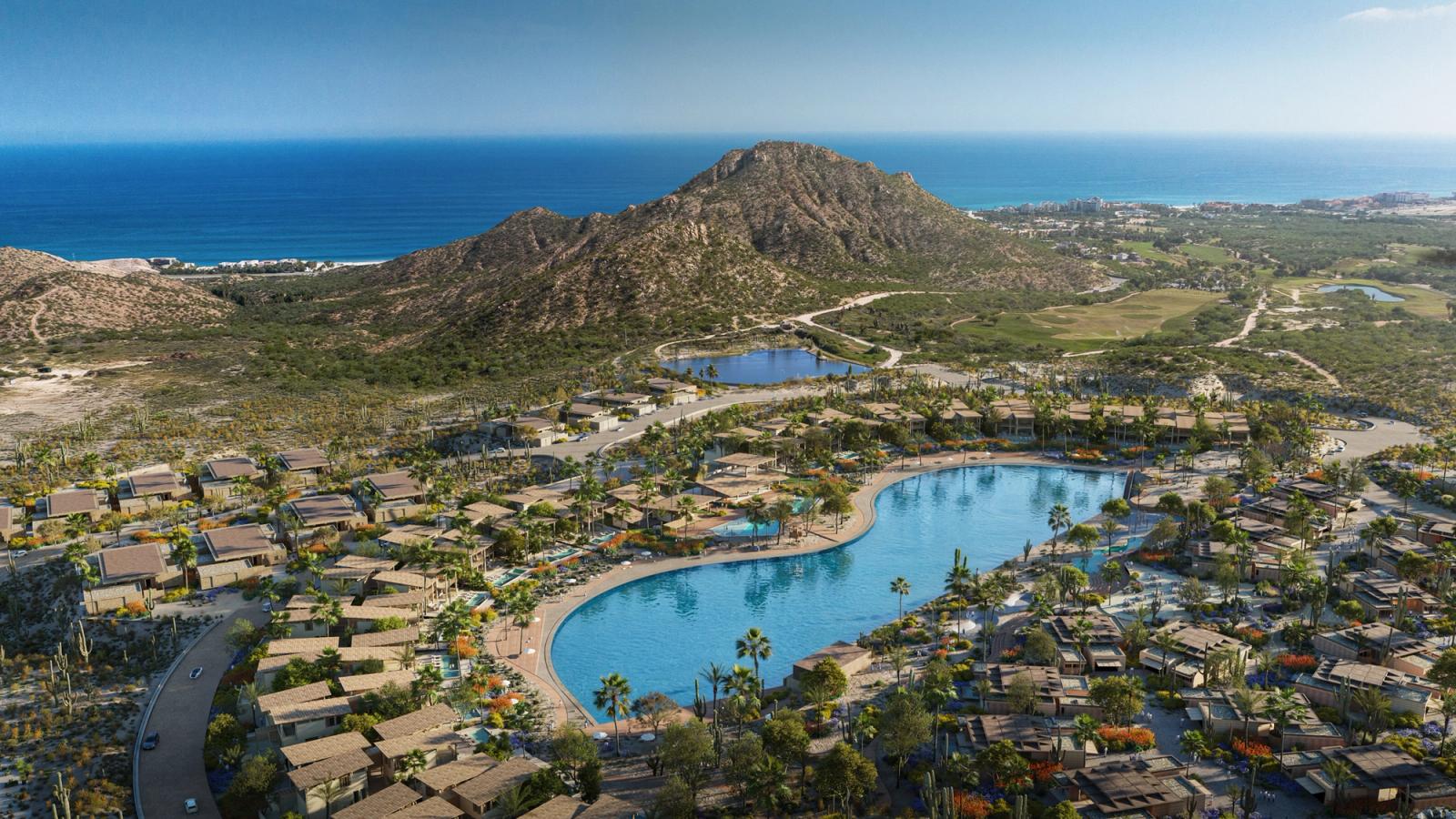
Cabo Real Surf Club, Los Cabos, Mexico. Thirty-one three-bedroom Surf Casitas from about $2.5 million, plus Boardwalk Homes on the strand, six-bedroom villas, and estate lots of roughly 2,200 to 2,600 square meters, all inside the established Cabo Real masterplan with a Robert Trent Jones II golf course. The developer, Meriwether Companies, reported total transactions past $200 million as of June 2026, after the Surf Casitas released in May sold out.
Austin Surf Club, Del Valle, Texas. A Discovery Land Company community with Kelly Slater, planned for 178 private residences around a 2,200-foot Kelly Slater Wave Co basin. Construction was paused in 2026 after contractors filed liens that had passed $16 million by July, so treat the timeline as open.
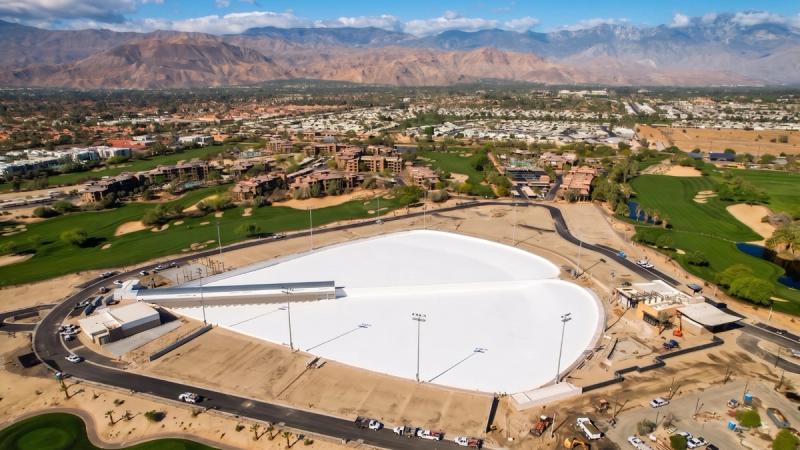
DSRT Surf, Palm Desert, California. Fifty-seven single-family lots, for-sale villas, and a hotel pad wrapped around a 52-module Wavegarden Cove, joint largest in North America alongside the one going into HTX Surf in Houston. The lagoon itself is finished and running private sessions.
Boa Vista Village, Porto Feliz, Brazil. JHSF's resort community an hour from São Paulo, anchored by a 220-meter PerfectSwell pool. The developer's current pricing puts Grand Lodge Residences around R$6.9 million, Surfside Residences overlooking the wave near R$11.5 million, and 696 square meter Village Houses around R$19.5 million. All three tiers have risen since the project launched.
São Paulo Surf Club, Brazil. The sister project, inside JHSF's Cidade Jardim complex in the city itself. Residences of roughly 260 to 870 square meters launched in 2026, and the club membership that comes with the district has been reported from about R$950,000 to R$1.25 million, roughly $170,000 to $225,000, plus monthly fees near R$3,300, about $600.
Praia da Grama, Itupeva, Brazil. The only completed one on this list. The first Wavegarden Cove in South America opened in 2021 inside the gated Fazenda da Grama estate, and lots of roughly 2,200 to 3,300 square meters still sell in later phases, each carrying title to the private beach.
El Nido, Punta del Este, Uruguay. A 66-hectare masterplan of 397 lots at about 1,000 square meters each, built around a Wavegarden Cove and a 7.5-hectare amenity program. Roads and services are in and home construction was expected to start in 2026.
South Britannia, British Columbia. The largest program on the list at roughly 1,050 homes, and the slowest: about 900 market units plus 150 rental and non-market apartments, with townhouses and apartments rather than detached lots. The surf park is Phase One, targeted for 2029, and homes follow from 2030 toward a 2035 build-out.
Ocean Kamp, Oceanside, California. Up to 667 all-electric homes across single-family, condo, townhome, and apartment products, with 10 percent set aside as affordable, plus a 300-room hotel on a 92-acre former drive-in site. Vertical construction was slated to begin in 2026 and phases run through the decade.
Veranda West, Draper, Utah. The most ordinary entry point in the United States. About 418 units, including more than 100 townhomes already built and close to 300 apartments, wrapped around an 8.8-acre Endless Surf lagoon approved in June 2026 and targeted to open in 2028. You are buying Salt Lake valley housing that happens to be getting a wave, not a surf estate.
Aventuur Jacksonville, Florida. The lagoon sits inside eTown, an existing master-planned community with homes already selling across a range of normal Jacksonville price points, with multifamily planned in later phases. Of everything here, it is the cheapest way to end up living minutes from a Wavegarden Cove.
Coral Mountain Desert Club, La Quinta, California. A 400-acre private club community from Meriwether Companies, the same developer as Cabo Real, set against the Santa Rosa Mountains at the south end of the Coachella Valley. Groundbreaking was announced in April 2026, with an 18-hole David McLay Kidd course, a Hart Howerton clubhouse, racquet sports and resort pools. First-phase amenities and the golf course are targeted for 2028.
Three Bridges, Salem, Utah. A 532-acre membership resort in the Wasatch foothills, built around an 18-hole course and a Beach Club on a surf and paddle lake. The wave is a UNIT Surf Pool the developer describes as the largest ever built at 18 metres wide, which makes it a floating standing wave rather than a lagoon. Worth knowing before you buy for the surfing: the Beach Club is targeted for 2026 but the branded hotel is not due until 2028.
Four ways to get access
Buy the house, the wave comes with it. Zion Shores, Praia da Grama, Cabo Real, and Austin Surf Club tie surf access to ownership. This is the purest version of the model and the most expensive.
Buy a membership without a house. Crest Surf Clubs on Long Island is the clearest example: its investment materials have described the right to a membership at $35,000 to $120,000 and up, with founding memberships reported around $100,000 and annual dues near $20,000, funds held in escrow until the pool is built. São Paulo Surf Club works similarly, at Brazilian luxury-club prices.
Buy nearby in the wider masterplan. eTown in Jacksonville, Veranda West in Draper, and Ocean Kamp in Oceanside all put ordinary housing inside or beside the district. Access terms vary and are usually not deeded, so read what is actually promised.
Do not buy at all. DSRT Surf's hotel, and South Britannia's planned cabins, lodge, and surf hotel, are built to sell you nights rather than title. (DSRT's villas and its 57 single-family lots are a different product, and are for sale.) For most surfers this remains the sane option.
The recurring bill
The purchase price is the part people focus on. The dues are the part that determines what the wave costs you every year for as long as you own.
Zion Shores is unusually transparent about it: HOA dues have been estimated at $500 to $600 a month, and the community has said that covers roughly half the lagoon fee, with surf pool operations covering the rest. Crest's structure is around $20,000 a year. São Paulo's is near R$3,300 a month. Final figures at most of these projects are set by boards that do not exist yet.
Those numbers make sense against what operators told the room in Orange County: insurance runs 5 to 8 percent of operating expenses at a surf park, against 1 to 2 percent at a restaurant; developers are advised to model about 50 percent pool occupancy; and a property takes roughly three years to reach maturity. A lagoon is a demanding machine to keep running, and in a private community the residents are the ones funding it. Ask what happens to dues if the club underperforms, because someone has to cover the gap.
The risk that does not appear in the brochure
Several of these communities are selling homes around a wave that does not exist yet, and surf park schedules slip more often than they hold.
Austin Surf Club is the cautionary case: a marquee developer, an eleven-time world champion, and a construction pause in 2026 over liens that had passed $16 million by July. South Britannia has moved from 2027 to 2029 for its pool, with homes after 2030. Ocean Kamp is phased through the decade. Even DSRT Surf, which has a finished lagoon and has hosted pro sessions, had not opened public bookings as of early August.
The practical rule is to buy the house and the location on their own merits, and treat the wave as an upside rather than as the thing you are underwriting. If the lagoon opening two or three years late would change your decision, that is the answer.
What to ask before you sign
- Is the lagoon separately funded and under construction, or does it depend on home sales?
- Who operates the wave, and is that contract signed?
- Are surf sessions included in dues, capped per household, or billed on top?
- How many surfers share the pool at capacity, and what does a resident session actually look like on a busy Saturday?
- Can the operator sell public or corporate sessions that compete with residents for water time?
- What happens to dues if the wave opens late, or runs under its projections?
- Where does the water come from, who pays for it, and what happens if the jurisdiction restricts it?
- Is the membership transferable when you sell, and does it convey with the home?
- For lots: is there a build-out deadline, and what design and builder restrictions apply?
Where this is heading
The private and residential share of this industry keeps rising. Brazil's best pools are already members-only, Mexico's newest is private, Utah's two are residential, and the projects announced in the last year lean the same way. For anyone who just wants to book a session, that is worth tracking: our directory flags access model on every park, and the price guide covers the ones that still sell sessions to the public.
For everyone else, the surf-anchored community has become a real asset class with real buyers, and it is being financed the way golf communities were forty years ago. The full list of projects we track, with developers, unit counts, and status, is in our real estate section.
Rendering courtesy of Cabo Real Surf Club / Endless Surf. Prices are as stated by developers, public listings, or press reports at the time of writing. Surf Park Guide is not a broker and receives no commission on any sale.