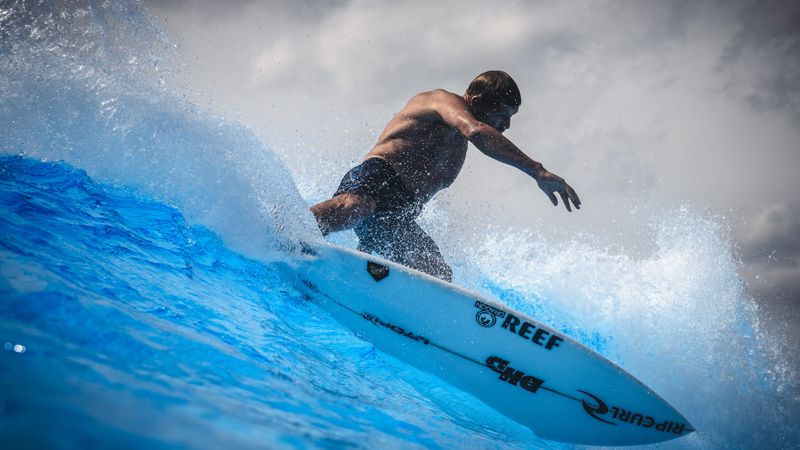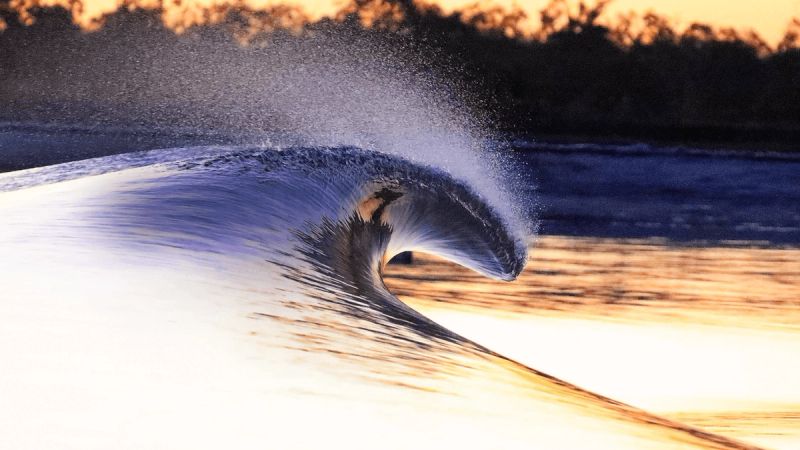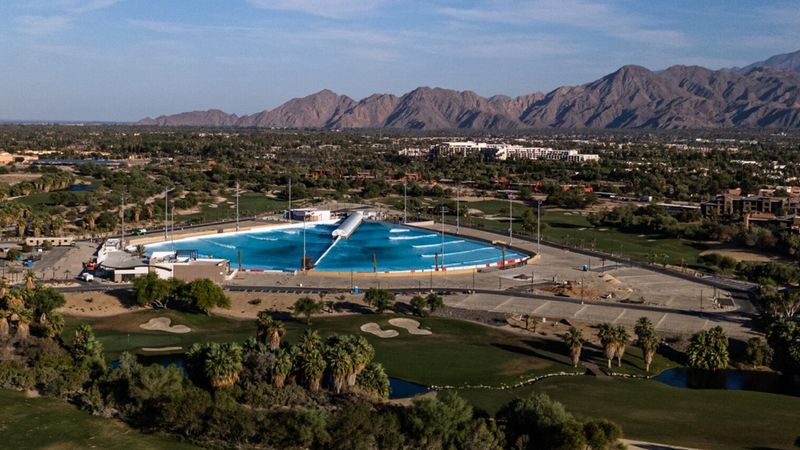
Screengrab: TBPN.
Friday was a normal day at work, and I had TBPN on in the background. For anyone who doesn't watch it, TBPN is the daily tech and business show hosted by John Coogan and Jordi Hays, and this episode had a stock selloff, a jobs report and the end of the Cybertruck to get through. Then, all of a sudden, they were talking about wave pools.
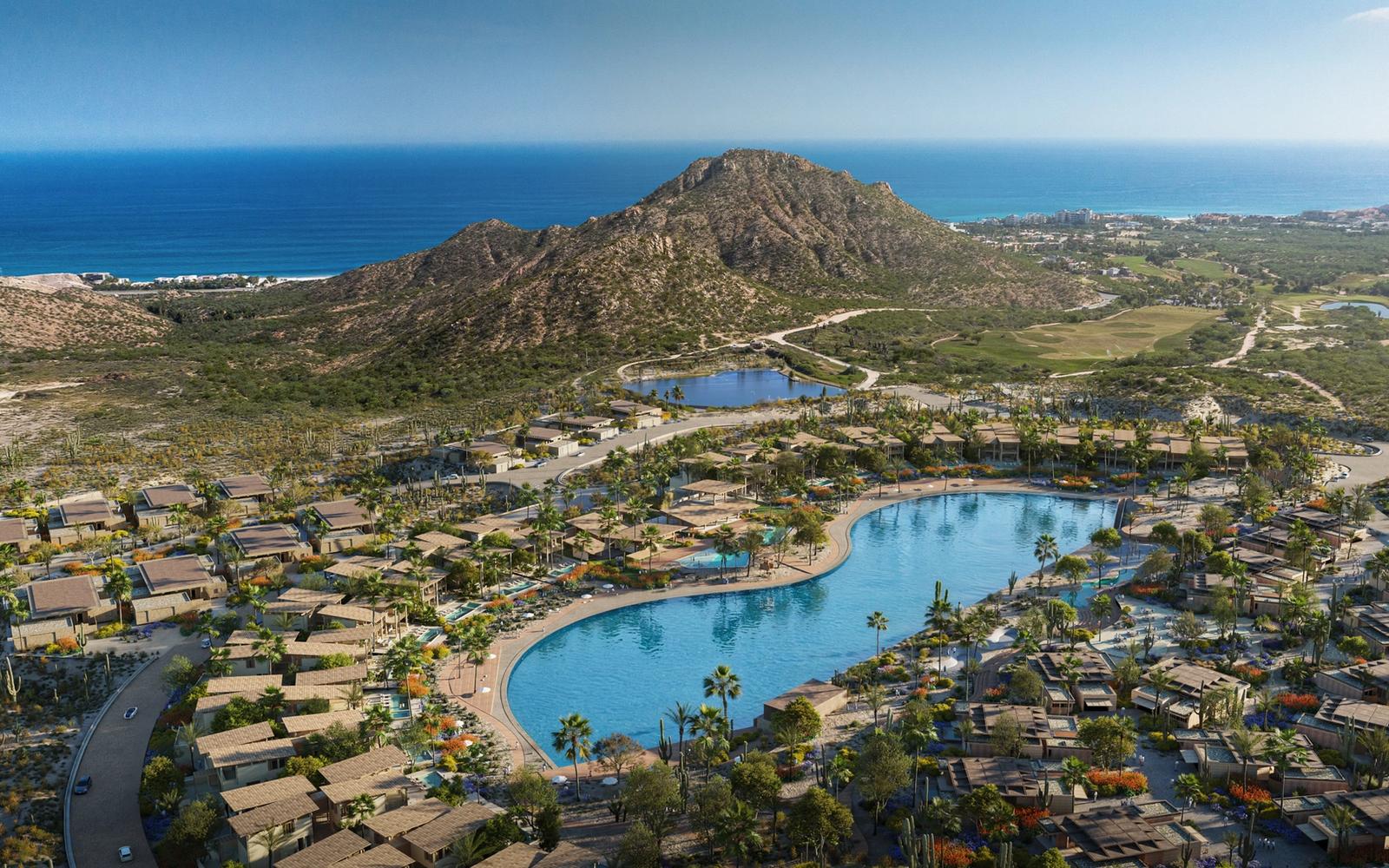
The prompt was The Wall Street Journal's Mansion section, and Nancy Keates's story "The Surf Communities Selling Man-Made Waves to Homeowners." Her subject is developers in Texas, Utah and Arizona wagering that a surf lagoon can sell high-end homes despite what it costs to build one and the monthly fees owners pay. It features several communities in our real-estate directory, including Cabo Real Surf Club (Los Cabos), Zion Shores (southern Utah) and The Desperado (Waco Surf).
What they said
John Coogan read the story on air, then asked his co-host Jordi Hays, who surfs wave pools, for his view. "Love wave pools," Hays said, but he "cannot imagine buying a property down in Mexico off of the beach right next to like a chlorinated pool," because "the ocean has so much more to offer than just surfing." He had just surfed Palm Desert's new wave pool, DSRT Surf, and "had an amazing time," he said, but he "had no desire to like live right on the pool."
Coogan saw more of a case for one buyer in the story, a Zion Shores lot owner with seven children: for a family that size, he said, "bringing the surf to you, not a bad trade."
When the Journal got to fees, Coogan wanted to know why one hour of surfing costs more than another, and whether it comes down to wave size. Hays said parks charge different rates by time, with peak pricing, and that some sessions "take a lot less energy and you can put more people in the pool," while other settings mean bigger waves.
Then Hays made his main point:
> "You have to have conviction that the operator is going to continuously update the technology because the pools that I was surfing 2 years ago are not fun anymore in comparison to the pool that I just surfed."
"If you're really into surfing pools," he added, "you kind of always want to be on the pool that just got built."
What our directory shows
That point is one our data can speak to, because every community in our real-estate directory has already picked its machine. Of the 16 surf communities we track, five use Wavegarden, four Endless Surf and four PerfectSwell, with Zion Shores pairing its PerfectSwell with a UNIT wave. One has a Kelly Slater Wave Co pool, one a UNIT standing wave, and one has not named its technology.
The machine is the expensive part to change. Analysts quoted by the Journal put the cost of a single lagoon, with its surf deck, parking and food and drink, at $38 million to $350 million. Plenty can improve without new concrete, though. DSRT Surf, the pool Hays had just surfed, opened to the public on 26 September, and within weeks it had revamped its wave menu and cut session prices by 30 to 40 percent after listening to customer feedback, Surf Park Central reported.
The fees are real. At Zion Shores, owners pay a $500 monthly HOA fee on top of surf fees of $30 to $200 an hour, developer Cody Larkin told the Journal. Our directory lists its available lots at $1.69 million each, The Desperado's homes from $1.6 million and Cabo Real's homesites from $1.5 million, while Three Bridges in Utah announced custom homesites from $300,000 in 2023. For surfers who are not buying, a public session at an open park costs a median of $65 at a surf lagoon and $56 on a standing wave, across the 42 parks in our cost guide.
The case for the pools
Hays's preference for the ocean is hard to argue with, and at Cabo Real buyers can have both: the home one buyer in the Journal's story plans there will sit across the street from the beach. Inland, Coogan's point carries more weight. Controlled waves mean a family with mixed abilities can all surf together, as the Journal put it, a few hours' drive from home instead of a flight to the coast.
Water is the other common objection, and these projects have answers. Cabo Real's basin is filled with treated seawater from a desalination plant built for the project, not municipal water or the aquifer that serves Los Cabos, and the pool planned in Draper, Utah, will use a closed-loop system designed to capture rainfall and snowmelt.
Buyers seem convinced, too. Zion Shores' own site says only 25 of its 65 properties are left, and Cabo Real's developer reports contracted sales above $200 million.
I'm with Hays that nothing fully matches the ocean. But I've been landlocked in Utah since 2019, and my first wave pool trip, to Waco that same year, was the first time since moving inland that I felt I could really enjoy surfing again. For surfers in that spot, a lagoon down the road makes the difference between surfing regularly and barely surfing at all.
Watch it
The segment starts at 27:11 in Friday's Diet TBPN on YouTube, the half-hour cut of the show, and runs about four minutes. The full episode has the whole conversation, starting at 37:49.