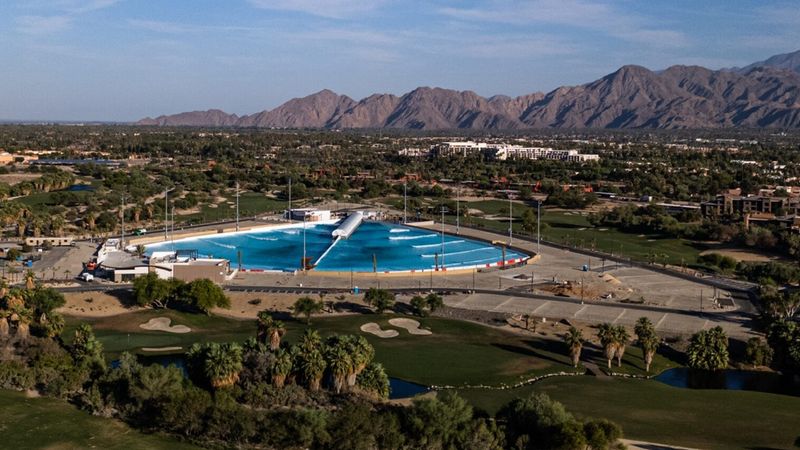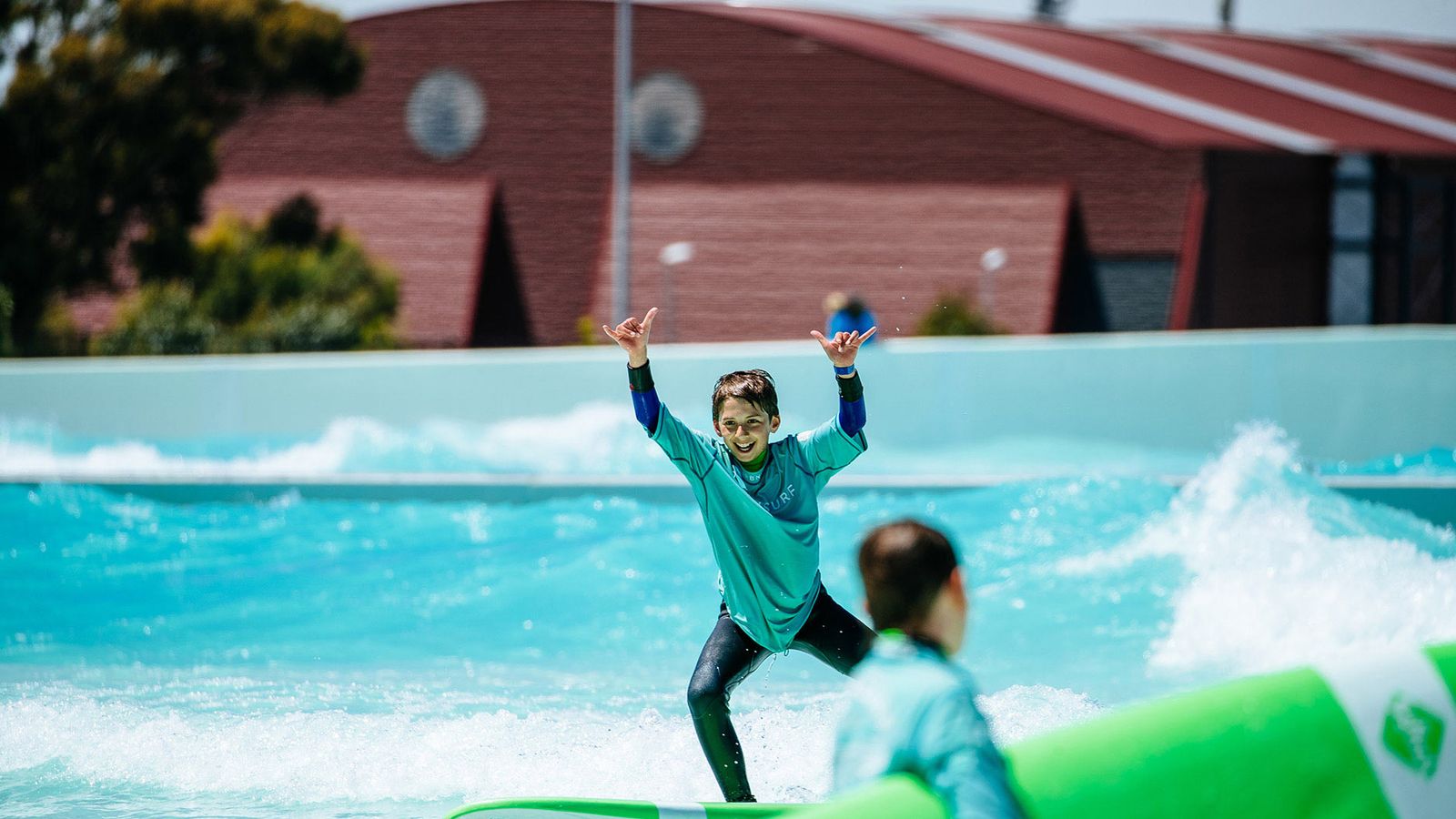
Learning to surf in the ocean is hard. You spend your first ten sessions getting worked by whitewater, dodging other surfers, reading a lineup you do not understand yet, and paddling for waves that vanish before you stand up. A wave pool removes almost all of that. The wave comes on a schedule, in the same spot, at the same size, with no rip current and no crowd fighting you for it. For a complete beginner, it is the fastest and least frustrating way to actually learn.
Here is everything you need to know before your first session.
Why a pool beats the beach for your first time
In the ocean, a beginner spends most of their energy just managing the environment. Waves come in irregular sets, the takeoff spot moves, and you are sharing water with people who know what they are doing. A wave pool hands you a clean, identical wave every time, in a designated beginner zone, with an instructor usually standing right there. You get more quality attempts in one hour than you might get in a full day at the beach.
The waves are also designed for learning. Beginner settings at most parks are gentle, waist-high rollers with a long, forgiving face, the kind of wave the ocean only occasionally produces. You are practicing the actual skill, popping up and riding, instead of surviving.
What to book
The single most important decision is booking the right session. Every serious park tiers its sessions by ability, and you want the true beginner or learn-to-surf option, not the one that merely sounds approachable.
Look for the words beginner, intro, learn to surf, or foam. Avoid anything labeled intermediate, advanced, performance, expert, or barrel, no matter how confident you feel. The step between tiers is bigger than it looks, and booking above your level means an hour of falling instead of surfing.
A few standouts for first-timers, all with dedicated beginner programming and public access:
- The Wave Bristol in England runs one of the most refined beginner operations anywhere, with 90-minute beginner lessons from £41, wetsuit and soft-top included.
- URBNSURF Melbourne has a well-run beginner bay and clear coaching structure.
- Waco Surf in Texas includes a board and in-water coaching on its beginner Coaster session, which is friendlier than many.
- Lost Shore in Scotland and Atlantic Park in Virginia Beach both have strong learn-to-surf tracks.
If you are near a standing-wave venue like The LineUp at Wai Kai or Heroes Paradise, know that it is a different skill. Standing waves are a fun, cheaper introduction to board control, but they do not teach the pop-up and paddle timing that ocean surfing needs. For learning to surf in the traditional sense, book a traveling-wave lagoon.
What to bring, and what is provided
Most parks include the two things you actually need, a wetsuit and a soft beginner board, in the beginner session price. Confirm this when you book, because a few charge extra for gear and it changes the value.
Bring: a swimsuit to wear under the wetsuit, a towel, a change of clothes, and water. If you have long hair, tie it back. If the pool is outdoors and sunny, reef-safe sunscreen, though many sessions are short enough that it barely matters.
Do not bring your own board for a first session. The park's soft-tops are bigger, floatier, and far easier to stand on than anything you would buy, and they are built to take beginner abuse.
What actually happens in the session
Arrive early. Almost every park requires a check-in window before your slot, often a full hour for first-timers, for waivers and a safety briefing. Turning up five minutes before your session means missing water time, not the paperwork.
The session itself usually opens with a short land lesson: how to lie on the board, where to put your feet, how to pop up. Then you get in the water in the beginner zone. The wave arrives on a set interval, an instructor points you into position, and you paddle, push up, and try to ride. You will fall a lot at first. Everyone does. By the end of an hour most people have stood up at least once, and many are riding the whitewater to the beach.
Expect somewhere between 10 and 20 waves in a beginner hour depending on the park and group size. That is far more usable attempts than a beginner typically gets in the ocean.
The mistakes everyone makes
Booking above your level. Covered above, but it is the big one. Confidence from other board sports does not transfer as much as you think.
Looking down. Beginners stare at their feet or the nose of the board, which pitches you forward. Look where you are going, down the line, and the board follows.
Standing up too slowly, or too early. Pop up in one motion once the wave has you, not in stages, and not before it does. The instructor will time this for you, so listen.
Fighting the fall. When you go, just go. Cover your head, relax, and let the wave pass. Tensing up is how people tweak something.
Overbooking the day. One beginner hour is tiring. Paddling uses muscles you do not normally use, and most first-timers are spent well before the session ends. Do not book back-to-back sessions your first time.
Is it worth it?
For a first-ever surf, a wave pool is close to ideal. You will learn faster, fall in a controlled environment, and walk away actually knowing whether surfing is for you, all without the intimidation of a real lineup. At 40 to 100 dollars for a session with gear included, it is also a reasonable way to try the sport before committing to anything.
Ready to find your first wave? Filter the full directory by beginner-friendly and public access to find the closest park you can book, and check our wave pool price guide and the cheapest wave pools to plan the cost. Not sure which session to book? The level guide translates each park's names, the kids' guide lists minimum ages, and the glossary explains the jargon.
Photo courtesy of URBNSURF and Wavegarden.