Two American cities moved public money toward surf parks in the past week. McKinney, Texas votes Tuesday on $21 million for Cannon Beach. Myrtle Beach, South Carolina gave first-reading approval on September 8 to a $20 million package for a wave park at Broadway at the Beach. Neither is the first. Virginia Beach put more than $153 million into Atlantic Park, and it is still paying for it.
Four US cities now have public money or public land committed to a surf park. That is a small number, and it is four more than a few years ago.
What McKinney votes on Tuesday
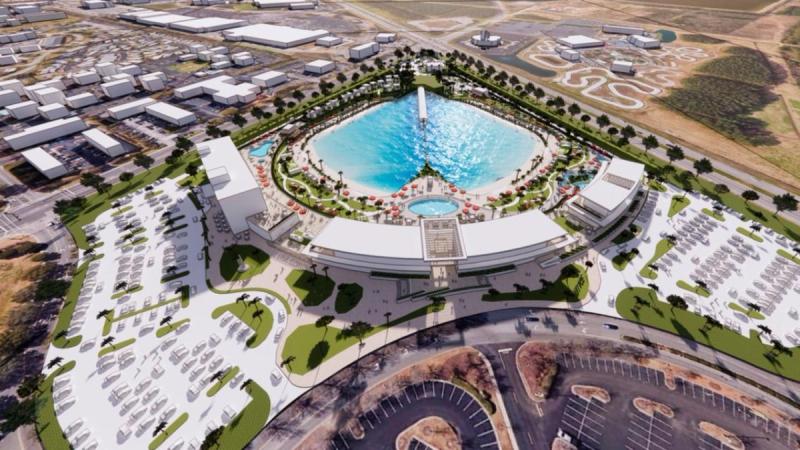
McKinney City Council considers $21 million from the McKinney Economic Development Fund for developer Cole Cannon on September 15. The recipient is a $200 million surf and adventure resort on 35 acres at Stacy Road and Highway 121, already under construction since December 2025, anchored by a three-acre SwellMFG lagoon alongside a hotel, hot springs, skate park, and entertainment district. Phase one is targeted for late 2027.
The project is structured as a partnership between Cannon, the city, the city's economic development corporation, and the McKinney Development Corporation. The stated returns are 700 jobs and 400,000 annual visitors. The site is one of the last large undeveloped parcels inside city limits, which is usually the argument that carries these votes.
What has not been reported is the payout trigger, meaning whether the $21 million goes out on a schedule, on completion, or against performance targets. That detail decides how much risk the city is actually taking, and it is the thing to look for when the agreement is published.
Myrtle Beach moved first, and structured it differently
Myrtle Beach City Council voted 6 to 1 on September 8 to give first-reading approval to a $20 million incentive for a $150 million hospitality development on 21st Avenue, next to Broadway at the Beach. The lone no vote, Councilwoman Jackie Hatley, said she wanted the finalised legal and financial terms before committing that much to a project on privately owned land. The plan centers on a 5.5-acre Wavegarden Cove on the 28-acre former Palace Theatre site, filed by the city as Project WGMB. The developer is a joint venture of Twin Point Capital, Highgate, and South Street Partners with the real estate investment trust Burroughs and Chapin, and the project is funded in large part by private equity.
The structure is the interesting part. The city pledges the $20 million but pays nothing until the project reaches 80 percent completion, which the assistant city manager estimated would take $120 million to $125 million of private investment first. The incentive would take the form of a credit against the company's property taxes over time, or a revenue bond if the developer wanted the money sooner. Mayor Mark Kruea put the logic plainly, saying that tourism is "our lifeblood at the end of the day." A city-ordered third-party analysis projects about $3 million a year in revenue for Myrtle Beach, $2.6 million for Horry County, and $9 million for South Carolina, against 364,000 annual visitors. Outlets reported different spending figures from the same meeting, $50 million in on-site spending in one account and $58.1 million in another, which the full study should settle. Opening is slated for March 1, 2030.
One thing first reading did not settle is who receives the money. The city has not named the counterparty, and the assistant city manager said that comes at second reading.
Back-ending the payment to 80 percent completion means a project that stalls costs the city nothing. Given how many surf parks have stalled, that is not a small provision.
Virginia Beach is the case the others will be measured against
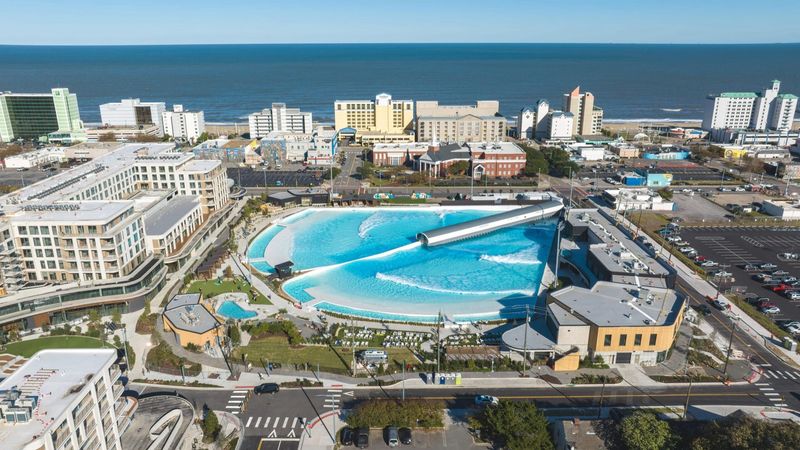
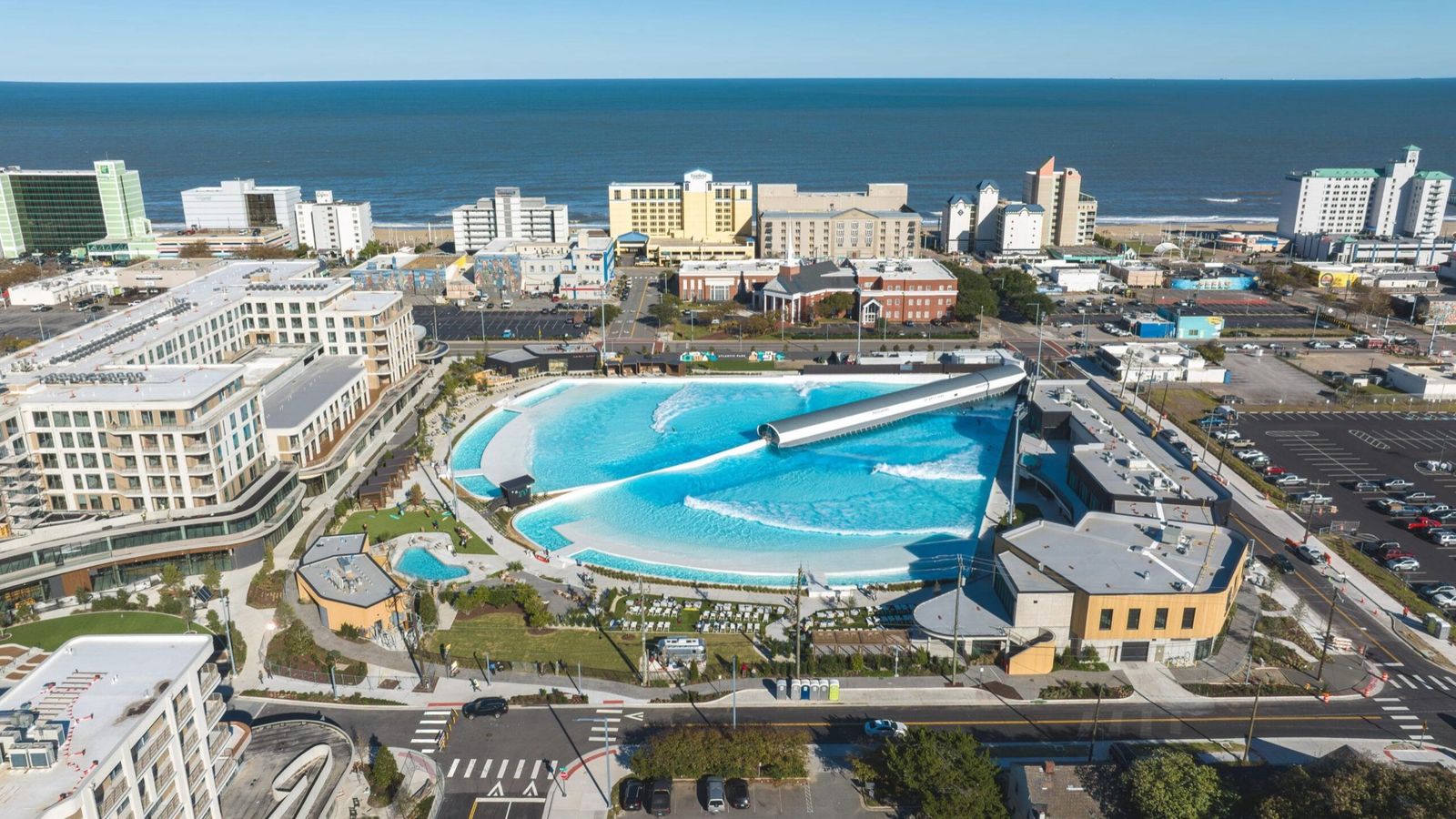
Atlantic Park opened in phases over the past year: a $350 million, 10-acre entertainment district on the former Dome site, built around a 2.67-acre lagoon and a music hall. The city calls it the largest tourism-related public-private partnership in its history. Through its development authority, Virginia Beach contributed more than $153 million. The Venture Waves group, which includes Venture Realty Group, W.M. Jordan Construction, Bishard Development, Priority Title and H2O Investments, and Virginia Beach native Pharrell Williams, funded the rest.
That is roughly 44 percent of the project cost, against about 13 percent in Myrtle Beach and about 10 percent in McKinney.
The costs did not stop at construction. In 2024, while digging the lagoon, crews found groundwater with high iron levels, and work halted for months over new filtration. The dispute over who pays ran through more than a year of closed council sessions before a settlement valued at $8 million was reached in March 2026: $3 million in cash from the city's risk management fund plus almost two acres of land transferred to the developer, in exchange for the developer releasing all environmental claims and proceeding with any Phase II without city money. The developer separately asked Virginia for $10 million in state funds; the House of Delegates budget halved that and the Senate budget included nothing.
In June 2026, the Virginian-Pilot reported that the city would tap its tourism tax fund to service Atlantic Park debt. The same outlet reported in December 2022 that the taxpayer contribution had already grown by $18.4 million against the original figure.
A fourth version: no cash, just land
Alameda, California is doing something different again. A $50 million surf pool proposed for Alameda Point has been negotiated with a single developer since October 2025 with no competitive bidding, on city-owned land at a decommissioned naval base. No municipal cash is on the table. The public asset is the site itself, under a long-term lease. A rival wave-pool company challenged the process publicly in July 2026 and the city has said nothing since.
The four deals are not the same thing
Reading these as one trend flattens a real difference in exposure.
- Virginia Beach fronted the capital through a public authority and carries the debt. The city is exposed to cost overruns, and it has already absorbed some.
- Myrtle Beach pledges money that only moves at 80 percent completion. Construction risk stays with the developer.
- McKinney draws from a dedicated economic development fund, which in Texas is typically fed by a sales tax voters approved for this purpose. The payout terms are not yet public.
- Alameda commits no cash and instead commits land, where the cost to the public is the foregone alternative use and the property tax a lease does not generate.
The common thread is that surf parks are being financed as tourism infrastructure rather than as recreation businesses. Cities are buying projected visitor counts.
There is now one number to test that against. Atlantic Park drew more than 90,000 guests in its first full year. Myrtle Beach is projecting 364,000, four times that, from a lagoon about twice the size with a hotel attached. A higher number is reasonable. Four times higher is a forecast worth seeing the methodology behind, starting with how a visitor is counted.
There is also a difference in what the money buys. Virginia Beach owns the parking garages and the concert venue its contribution paid for. Myrtle Beach's $20 million, as described so far, buys no public asset.
Good to Know
For anyone tracking whether a park will actually open, a public incentive is a real signal, with limits. It means a city ran its own financial analysis and a council put its name on the result, which is more scrutiny than most private projects get. It does not mean the money is spent, and it does not mean the waves arrive on schedule. Austin Surf Club had a world champion, a marquee developer, and no public subsidy, and it paused construction this year over liens.
Watch the payout trigger. A city that pays on completion has made a bet it can afford to lose. A city that pays up front has made a different one.
Of the 84 parks in our directory, 10 are open in the United States and 18 more are in the pipeline. The McKinney vote is Tuesday. The Myrtle Beach ordinance needs a second reading. We track both on their park pages and in the opening tracker.