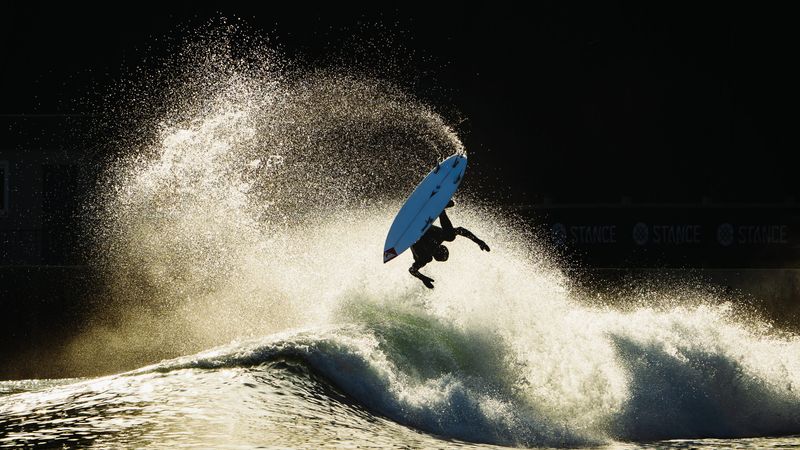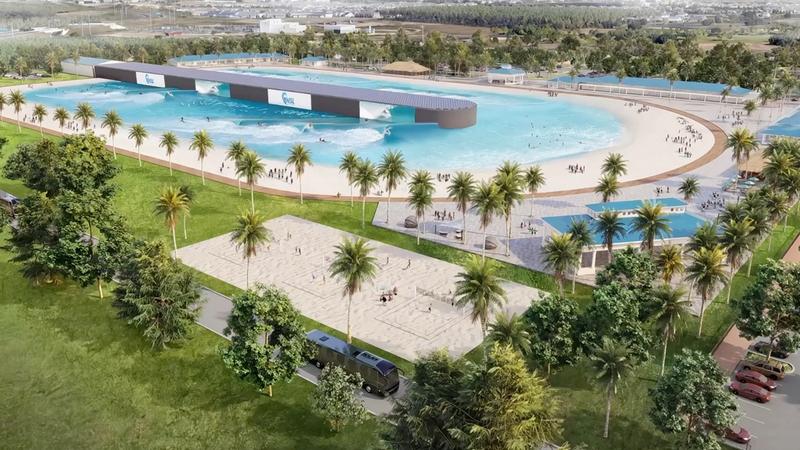
Competitive surfing has spent years working out what to do with wave pools. The World Surf League has held Championship Tour events at the Surf Ranch and, in February 2025, at Surf Abu Dhabi, but those were contests for the world's best surfers. Now there is a tour built the other way around: for the people who actually surf wave pools, at the wave pools they already go to.
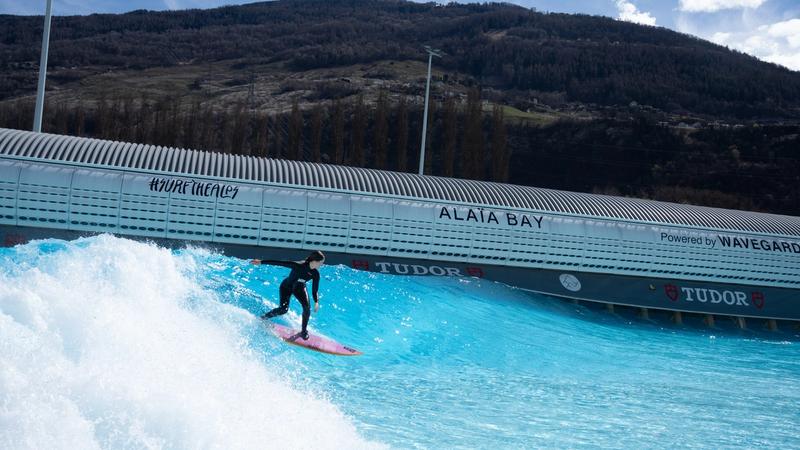
The Wavepool Surf Tour launched on August 1 with the Alaia Surf Challenge at Alaia Bay in Sion, Switzerland. The tour calls it the first event in "a new international series created specifically for wavepool surfing", and its format is closer to an online video contest than a heat: The Inertia compared it to the Mavericks Big Wave Awards, where competitors submitted videos of their best waves.
How it works
The online events swap heats for a submission window. You book and pay for a normal session at the host wave pool during the window, on the wave setting for your division, then buy and download the footage from the venue's official video provider and upload your two best waves to the tour's platform. An international panel of five judges scores each wave, and the combined score of your two waves sets your place on the event's live leaderboard.
Alaia Bay's event runs a long window. As of 11 October 2026, its event page lists entries and video uploads from 1 August to 31 October, with judging from 1 to 3 November, while the rules section on the same page still gives 25 October as the entry deadline, the closing date the tour announced in August. That is the whole point of the model: instead of one shot on one day in whatever conditions show up, you get the full window and as many sessions as you want to pay for. Only your latest pair of submitted waves counts, and you can pay an extra upload fee to swap in better rides before the deadline. The tour's FAQ spells out the strategy: more sessions give you more chances to capture stronger waves.
Judging runs on a framework the tour calls Triple C: commitment, creativity and control. There are eight competition divisions plus four special categories, spanning juniors through masters, adaptive surfers and open. Entry starts at 30 dollars for adults and 20 for groms under 14, on top of the cost of the session and the footage. That is a low bar to enter a judged surf contest.
Why a pool makes this possible
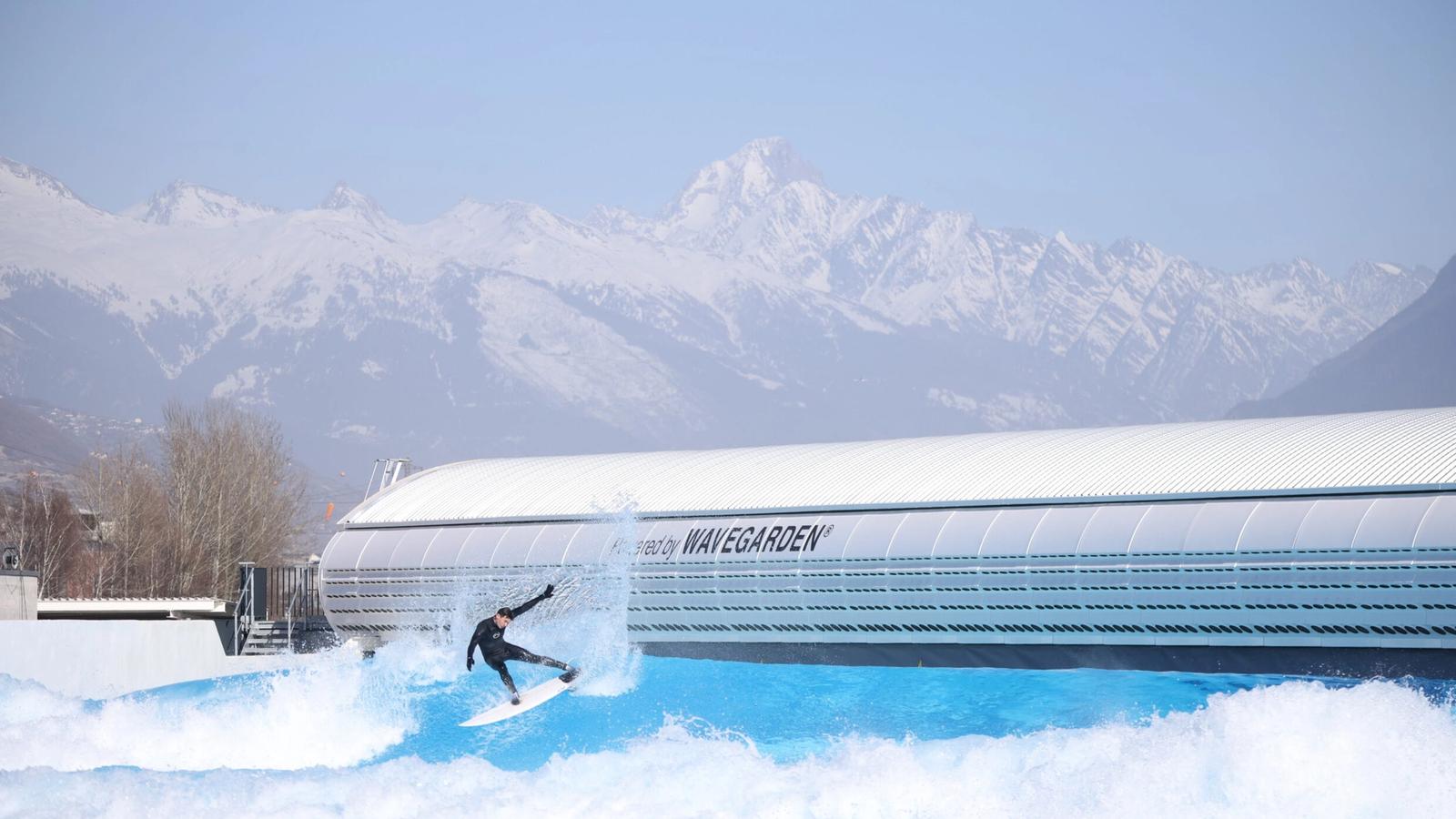
The format leans on what a pool does well. The tour's own pitch is that controlled wave pool conditions "eliminate ocean unpredictability". At Alaia Bay, every competitor in a division must surf the same defined wave setting on the same Wavegarden Cove, whether they paddle out in the first week of the window or the last. That is what lets a single event stretch across three months and still compare everyone in a division on the same wave.
It also lowers the bar to entry. You do not need to qualify or be available on a specific morning, though for now you do need to get to Alaia Bay, because only waves ridden there count for this event. If you can reach a participating pool during the window and afford a session, you can enter the same contest as everyone else in your division.
What is confirmed, and what is not
Be clear-eyed about the stage this is at. As of 11 October 2026, the tour's events page lists three dated events for the 2026-27 season: the Alaia Surf Challenge; Ride The Future, a specialty event at "various wavepools" from 13 November to 13 December 2026; and WPST Event II, with its location still to be announced, from 1 February to 31 March 2027. Ride The Future and Event II are both listed with "details coming soon". The season is meant to build toward a live World Final, and the tour says 176 surfers across all divisions will qualify for it.
So this is still a launch season. The entry price is low, and Alaia Bay is a smart place to start: it has run a Wavegarden Cove since it opened in 2021, the tour says the 2021 Alaia Open there inspired the Wavepool Surf Tour, and it sits in the Rhône valley of the Swiss Alps, about two hours by car from Geneva Airport.
Update, October 2026: a schedule, still provisional
At the end of August the tour announced a provisional 2026-2027 schedule of nine events across nine countries, plus regional finals and a live World Final. As of 11 October 2026 it is still running only one event, Alaia Bay, where the homepage now lists entries closing on 31 October.
After the Alaia Surf Challenge, the schedule has Ride The Future from 13 November to 13 December 2026, then a 2027 opener in February or March. O2 SurfTown MUC in Munich follows in March or April, Atlantic Park in Virginia Beach in April or May, Lost Shore in Edinburgh in May or June and Surfers Cove in Óbidos, Portugal, in June or July. The second half moves through the Americas in July or August, China in August or September and the Middle East in September or October, with regional finals in November 2027 and the World Final in November or December 2027. The tour says all dates and locations remain provisional and subject to change, with further venue announcements to follow.
Nine countries is a far bigger ask than it sounds. Our directory tracks 27 open surf lagoons worldwide, and they sit in just 14 countries. A nine-country season built on those lagoons alone would need venues in nine of the 14, and several of those countries have exactly one.
Working from the open lagoons we track, the plausible list is short. The United States and Brazil have six each, the most of any country, but five of Brazil's six are members-only, private or for resort guests, and one of the US six, Kelly Slater Surf Ranch, is private. The other US lagoons include Waco Surf and Atlantic Park, which is already on the provisional schedule. Australia has two through URBNSURF Melbourne and Sydney, the United Kingdom has two in The Wave Bristol and Lost Shore, and Saudi Arabia has two. After that it thins out fast: China, Germany, Israel, Japan, the Netherlands, South Korea, Spain, Switzerland and the UAE have one open lagoon each. The provisional list already reaches past the open lagoons: Surfers Cove in Portugal has not opened yet.
That means the tour's ceiling is set partly by other people's build schedules. You can track those on our surf park directory.
Why it matters
When the Championship Tour went to Surf Abu Dhabi, it kept the ocean's heat format: the Surf Abu Dhabi Pro opened with three-surfer heats. The Wavepool Surf Tour builds its format around what a pool offers instead, which its FAQ describes as "scale, fairness, repeat attempts, digital judging, and global ranking", with a defined wave for each division and open entry.
Whether the Wavepool Surf Tour grows past its first event is an open question; its next two events are scheduled but still listed with "details coming soon". But if you have ever wanted to enter a real surf contest without qualifying for anything, the barrier is now a session fee, the footage and 30 dollars.
Photo of Alaia Bay courtesy of Wavegarden.