Wave pools have hosted plenty of competition. The WSL ran a championship tour stop at Surf Ranch for years, and a wave-pool-only contest series launched this summer. What has never happened is a world title being decided in one. That changes in November.
The International Surfing Association has confirmed that the 2026 World Para Surfing Championship will run from November 19 to 22 at DSRT Surf in Palm Desert, California. It is the eleventh edition of the event and the first ISA World Championship of any kind held in a surf lagoon rather than the ocean. Organisers expect around 140 athletes from 24 national teams across nine Para Surfing Sport Classes, covering standing, kneeling, prone, and visually impaired divisions.
Why a pool, and why this event first
For most competitive surfing, a pool is a trade. You give up the character and unpredictability of a real lineup and you get repeatability in return. For para surfing, that trade is much more one-sided, and it is worth being specific about why.
Start with the paddle out. In an ocean heat, getting to the takeoff zone through shorebreak, current, and sets is part of the event, and it is the part that varies most by impairment. Athletes in prone and kneeling classes, and those who rely on an assistant in the water, spend energy and time on that stretch before a scoring ride is even possible. A lagoon removes it. Surfers enter from a controlled beach or platform, and the wave arrives on a schedule.
Then there is fairness. Ocean heats are famously a lottery: two athletes in the same 20 minutes can get completely different wave counts and completely different quality. In nine sport classes with small fields, that noise can decide a world title. A pool gives every competitor in every class the same wave, at the same interval, at the same height. It is the closest surfing gets to a standardised course, and it matters most in exactly the discipline where classification already does a lot of work to make results comparable.
The practical layer is access. A purpose-built lagoon has flat pool decks, ramps, shade, changing facilities, and vehicle access within metres of the water, none of which a beach reliably offers. Past editions of this championship have run at La Jolla, Huntington Beach, and Pismo Beach, all of them requiring the whole event to be carried across sand.
ISA president Fernando Aguerre framed the move as a chance for athletes to work with lagoon technology in a high-performance setting, and said the championship has kept raising its own bar each year. The federation has been open about the longer game: para surfing is not yet on the Paralympic program, and the ISA is pushing for inclusion at Brisbane 2032. Controlled, broadcast-friendly, weather-proof conditions make a much easier case to the IPC than a beach where the swell might not show.
The venue
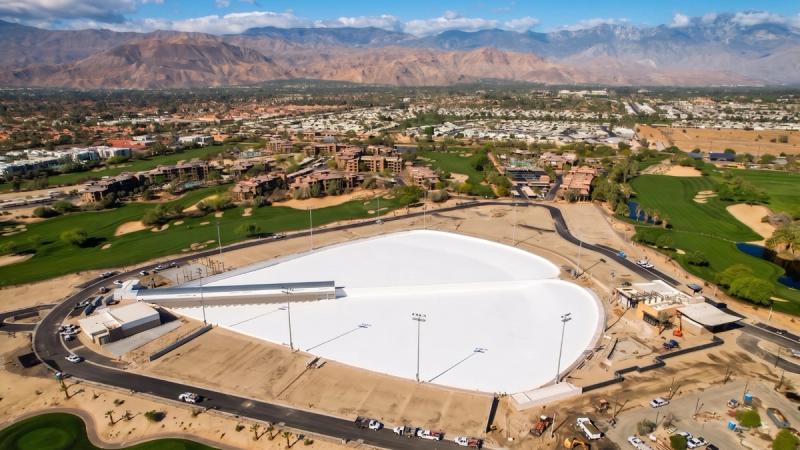
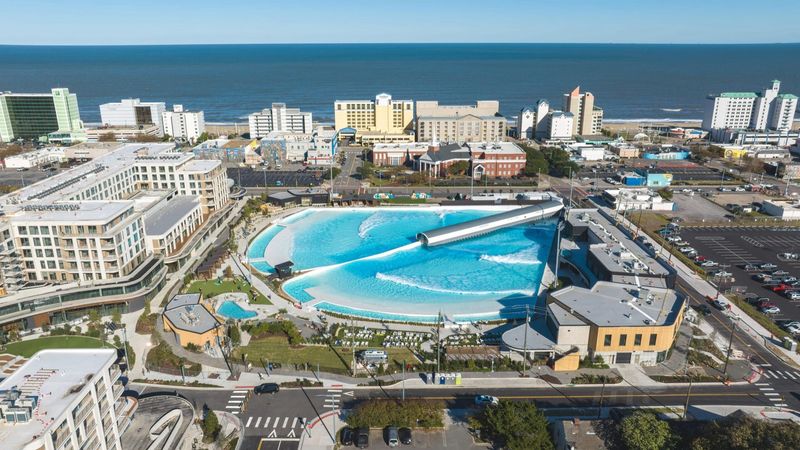
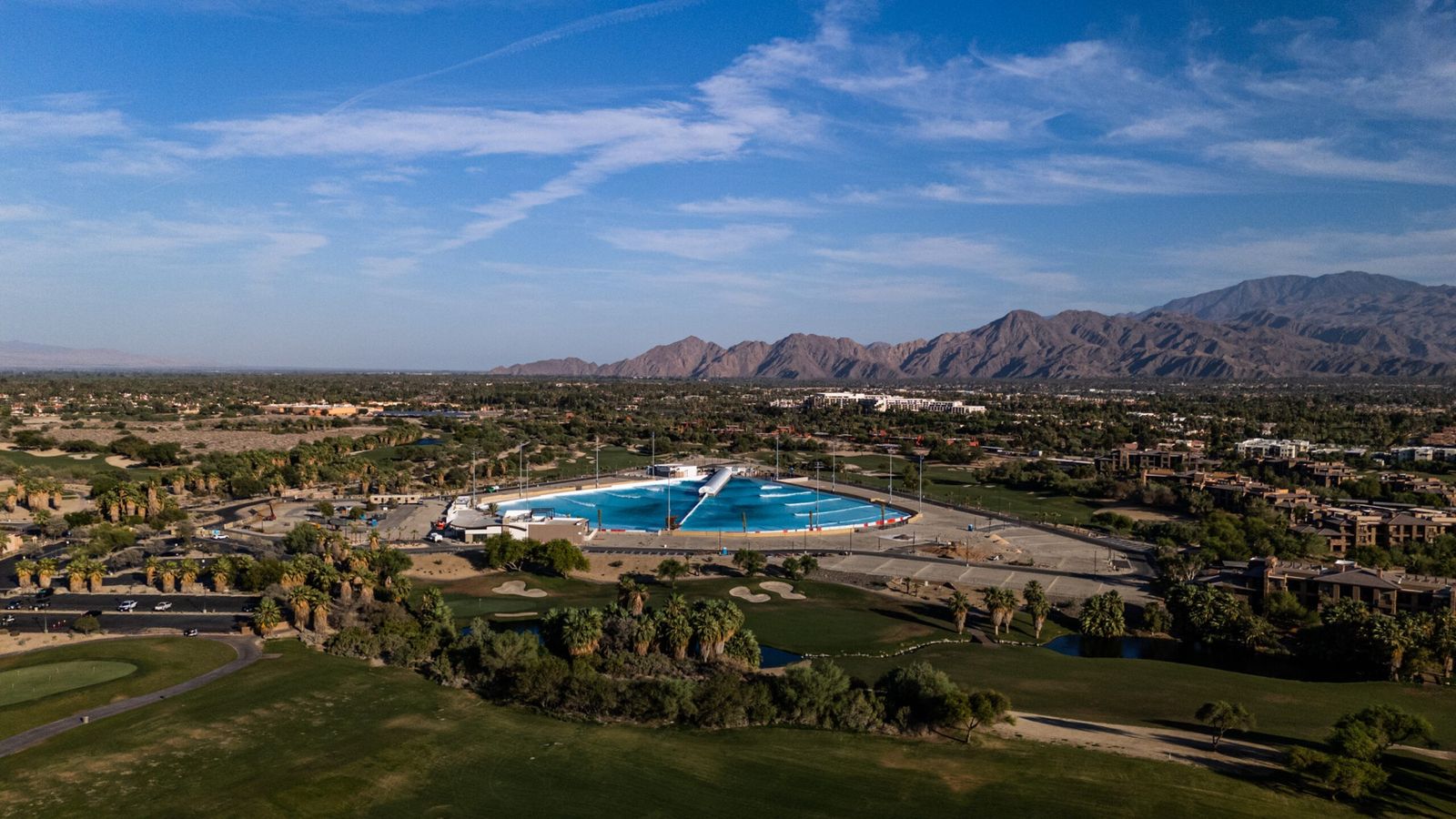
DSRT Surf is a 5.5-acre, 8.5 million gallon Wavegarden Cove, the largest surf lagoon in North America and only the second Wavegarden in the country after Atlantic Park in Virginia Beach. It runs up to 1,000 waves an hour with more than 60 wave settings, which is the specification that makes a nine-class event feasible: the same pool can produce a gentle reforming wave for one heat and a steeper wall for the next, without reconfiguring anything.
Wavegarden celebrated the pool's completion in early July, and the first surfers in it were a stacked invite list including Rob Machado, Griffin Colapinto, and Jacob "Zeke" Szekely, who called it the best wave pool in the world. That is the sort of quote a park pays for, but the footage backed up the wave quality.
The timing is the interesting part. As of late July, DSRT Surf still had not opened public bookings, with its booking page listing sessions as coming soon and the park pointing at summer 2026. If the schedule holds, the venue will host a world championship within a few months of its first paying customer. Our guide to the DSRT Surf opening covers what is known about the park and what is still to be confirmed.
November also happens to be the Coachella Valley at its best. Daytime highs in the seventies replace the 110 degree summer that makes the desert punishing, which matters when athletes and volunteers are in and out of the water for four days.
What it signals
Two things, and both are bigger than one event.
First, sanctioning bodies now treat lagoons as legitimate venues for titles, not just as exhibition stops. Once a world championship is awarded to a pool, the pool becomes a bookable, biddable venue like a stadium, and there are already parks in Europe, the Middle East, and Australia with the capacity to bid.
Second, and more concretely: this is the clearest argument yet that wave pools expand who gets to surf competitively at all. Removing the paddle, the current, and the sand from the equation does not make the sport easier. It makes it available to athletes for whom the ocean's logistics, not the surfing, were the limiting factor.
The event runs November 19 to 22 in Palm Desert, with spectators allowed on site and a livestream on the ISA's channels.
Photo of DSRT Surf courtesy of Wavegarden.